

Which Personality Types Make the Best Leaders?
Published on: August 22, 2026
By : Teddy Bridges
Which Personality Types Make the Best Leaders
Introduction
What makes a great leader? Is it confidence, communication, intelligence, experience, or personality?
There is no single personality type that guarantees leadership success. Effective leaders can have very different personalities, strengths, and communication styles. Some are outgoing and persuasive, while others are thoughtful, analytical, and calm.
However, certain personality traits may support important leadership skills, including communication, decision-making, adaptability, empathy, resilience, and the ability to motivate others.
Cognitive ability can also contribute to leadership performance, but it is only one factor and does not by itself determine leadership effectiveness.
A personality test can help individuals better understand their natural leadership tendencies, strengths, communication preferences, and areas for development. Rather than determining whether someone will become a successful leader, personality insights can support self-awareness and professional growth.
In this guide, we'll explore the personality traits commonly associated with effective leadership and explain why different personality types can succeed in leadership roles.
Personality Tests vs Career Aptitude Tests
While a personality test focuses on understanding behavioural traits, preferences, and how a person typically interacts with others, a career aptitude test takes a broader approach by examining characteristics that may influence career fit, including interests, strengths, abilities, personality, and work preferences.
Is There a Best Personality Type for Leadership?
No single personality type is universally best for leadership.
Leadership effectiveness depends on many factors, including:
- Experience
- Communication skills
- Emotional awareness
- Technical knowledge
- Decision-making ability
- Adaptability
- Team needs
- Workplace culture
- The challenges facing an organisation
Personality may influence how someone leads, but it does not determine whether they can become an effective leader.
For example, an outgoing leader may motivate a team through energy and communication, while a more reserved leader may build trust through careful listening and thoughtful decision-making.
Different situations may also require different leadership strengths. A fast-changing environment may benefit from adaptability and confidence, while a complex project may require patience, organisation, and analytical thinking.
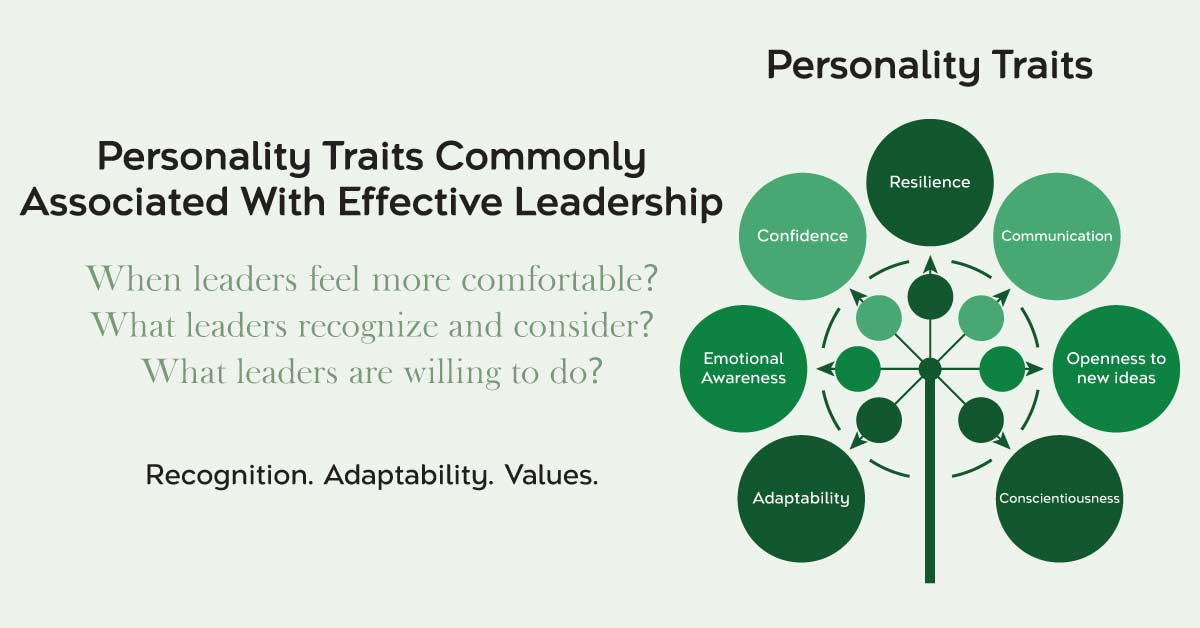
Personality Traits Commonly Associated With Effective Leadership
Although successful leaders can have different personalities, several traits may support effective leadership.
Confidence
Confident leaders may feel more comfortable making decisions, communicating direction, and taking responsibility.
Confidence can help leaders:
- Communicate goals clearly
- Make decisions under pressure
- Handle uncertainty
- Encourage trust
- Support team members
However, confidence is most effective when balanced with humility, curiosity, and openness to feedback.
Emotional Awareness
Effective leaders often recognise their own emotions and consider how their behaviour may affect others.
Emotional awareness may support:
- Stronger working relationships
- Clearer communication
- Better conflict management
- Empathy
- Team motivation
Leaders who understand different perspectives may be better prepared to create supportive and productive work environments.
Adaptability
Workplaces change constantly. Leaders may need to respond to new technologies, changing priorities, unexpected challenges, and different team needs.
Adaptable leaders are often willing to:
- Consider new ideas
- Adjust their approach
- Learn from experience
- Respond to changing circumstances
- Guide teams through uncertainty
Conscientiousness
Conscientious individuals often value responsibility, organisation, reliability, and achievement.
These qualities may support leadership by helping individuals:
- Set clear goals
- Plan effectively
- Meet commitments
- Monitor progress
- Take responsibility for outcomes
However, highly structured leaders may also need to remain flexible when circumstances change.
Openness to New Ideas
Leaders who are open to new perspectives may be more willing to explore innovative solutions and encourage creativity.
This may support:
- Problem-solving
- Strategic thinking
- Innovation
- Continuous learning
- Organisational development
Openness can be particularly valuable in industries that change quickly.
Communication
Strong leadership often depends on the ability to communicate clearly and listen carefully.
Effective communication may include:
- Explaining goals
- Listening actively
- Providing useful feedback
- Resolving misunderstandings
- Encouraging collaboration
Communication styles vary. Some leaders communicate through energy and persuasion, while others build trust through thoughtful questions and careful listening.
Resilience
Leadership can involve pressure, setbacks, uncertainty, and difficult decisions.
Resilient leaders may be better able to:
- Remain focused during challenges
- Learn from mistakes
- Recover after setbacks
- Support others during difficult periods
- Maintain long-term motivation
Resilience does not mean ignoring emotions. It involves responding constructively to challenges and continuing to move forward.
How Different Personality Types May Lead
Different personality types may bring different strengths to leadership.
Outgoing and Social Personalities
People who enjoy social interaction may feel comfortable:
- Speaking to groups
- Building professional relationships
- Motivating others
- Sharing ideas
- Creating team energy
These strengths may be useful in leadership roles involving communication, networking, public engagement, sales, or team motivation.
However, being highly social does not automatically make someone an effective leader. Strong leaders also need to listen and consider the needs of others.
Introverted and Reflective Personalities
More reserved individuals may bring valuable leadership strengths, including:
- Careful listening
- Thoughtful decision-making
- Independent thinking
- Strong concentration
- Thorough preparation
Introverted leaders may create more space for team members to contribute and may be less likely to dominate discussions.
Leadership does not require being the loudest person in the room.
Analytical and Logical Personalities
Analytical individuals may approach leadership through:
- Evidence-based decision-making
- Strategic planning
- Problem-solving
- Risk assessment
- Process improvement
These qualities may be valuable in technical, financial, scientific, engineering, and operational leadership roles.
However, analytical leaders may need to ensure that efficiency and data are balanced with empathy and effective communication.
Empathetic and People-Focused Personalities
People-focused leaders may pay close attention to:
- Team relationships
- Collaboration
- Employee motivation
- Individual development
- Workplace culture
Their ability to consider different perspectives may help build trust and strengthen team relationships.
However, leaders may also need to make difficult decisions, even when those decisions are unpopular.
Organised and Structured Personalities
Highly organised individuals may excel at:
- Planning
- Setting expectations
- Managing projects
- Creating processes
- Monitoring progress
These strengths may support consistency, accountability, and effective team coordination.
At the same time, structured leaders may benefit from remaining open to new ideas and flexible approaches.
Creative and Visionary Personalities
Creative leaders may be skilled at:
- Generating new ideas
- Identifying opportunities
- Inspiring change
- Challenging assumptions
- Developing long-term visions
These qualities may be valuable in entrepreneurial, creative, strategic, and innovation-focused roles.
Creative leaders may also benefit from working with people who bring strong organisational and operational skills.
Can Introverts Be Effective Leaders?
Yes. Introversion does not prevent someone from becoming an effective leader.
Introverted leaders may bring strengths such as:
- Active listening
- Careful preparation
- Thoughtful communication
- Independent thinking
- Focused decision-making
Some introverted leaders may prefer smaller meetings or one-to-one conversations, but leadership can take many forms.
The ability to listen, build trust, make informed decisions, and support others can be just as valuable as public speaking or social confidence.
Can Extroverts Be Effective Leaders?
Yes. Extroverted individuals may bring energy, enthusiasm, confidence, and strong communication skills to leadership roles.
They may enjoy:
- Leading discussions
- Building professional relationships
- Motivating teams
- Presenting ideas
- Creating momentum
However, extroversion alone does not guarantee leadership effectiveness. Strong leaders also need to listen, consider different perspectives, and make thoughtful decisions.
Why Self-Awareness Matters in Leadership
Self-awareness can help leaders understand:
- Their communication style
- Their decision-making preferences
- Their natural strengths
- Their potential blind spots
- How they respond to pressure
- How they interact with different personality types
A personality test may provide useful insights into these areas.
For example, a highly direct leader may learn that some team members prefer more context and collaboration. A highly empathetic leader may recognise the importance of setting clear boundaries and making difficult decisions.
Understanding personal tendencies can help leaders adapt their approach without changing who they are.
Can Leadership Skills Be Developed?
Yes. Although personality may influence natural preferences, leadership skills can be learned and strengthened.
People can develop:
- Communication skills
- Active listening
- Emotional awareness
- Conflict-resolution skills
- Decision-making abilities
- Strategic thinking
- Confidence
- Adaptability
A personality assessment can help identify strengths and areas that may benefit from further development.
The goal is not to become a different personality type. It is to understand your natural tendencies and build the skills needed to lead effectively.
How to Use Personality Test Results for Leadership Development
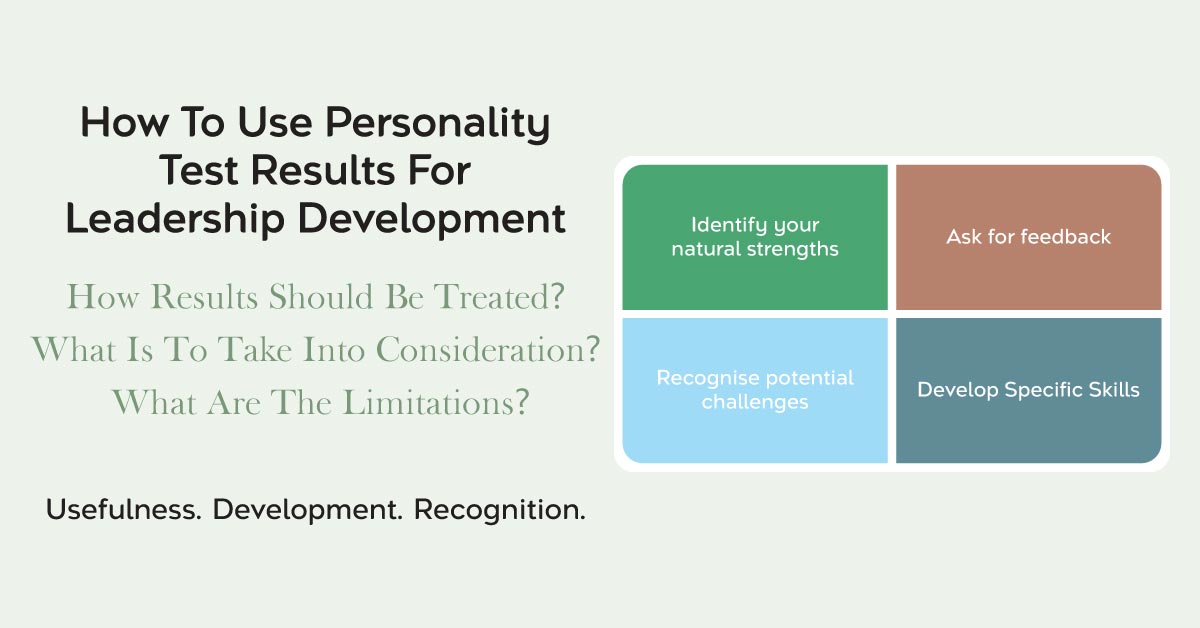
Personality test results are most useful when treated as a starting point for reflection.
Identify Your Natural Strengths
Consider which characteristics may support your leadership style.
For example:
- Strong communication may support team motivation.
- Analytical thinking may support strategic decisions.
- Empathy may strengthen working relationships.
- Organisation may improve project management.
Recognise Potential Challenges
Every personality style may have potential limitations.
For example:
- Highly confident individuals may need to seek more feedback.
- Highly analytical individuals may need to focus more on relationships.
- Highly empathetic individuals may need to establish stronger boundaries.
- Highly structured individuals may need to become more flexible.
Ask for Feedback
Personality test results can be compared with feedback from colleagues, managers, mentors, or team members.
Feedback may help you understand how your leadership style is experienced by others.
Develop Specific Skills
Choose practical areas for improvement, such as:
- Listening more actively
- Delegating responsibilities
- Communicating expectations clearly
- Managing conflict
- Becoming more adaptable
Using Personality Insights for Career Decisions
Personality insights can be useful when considering leadership roles or changing careers. Understanding your strengths, communication style, work preferences, and areas for development may help you identify roles and environments that align with your personal characteristics. However, personality should be viewed as one source of guidance rather than a fixed predictor of leadership or career success.
Conclusion
There is no single personality type that makes the best leader.
Effective leadership can come from outgoing, introverted, analytical, empathetic, structured, or creative personalities. Each style may bring valuable strengths while also presenting areas for growth.
A personality test can help individuals understand their natural leadership tendencies, communication preferences, strengths, and potential challenges. These insights can support self-awareness and professional development, but they should not be treated as a prediction of leadership success.
The most effective leaders understand their natural style, continue developing their skills, and adapt their approach to the needs of their teams and situations.
Ready to understand your personality and leadership style? Take our Personality Test and explore your strengths, preferences, and personal characteristics.

