

What Does a Career Aptitude Test Measure?
Published on: July 17, 2026
By : Teddy Bridges
What Does a Career Aptitude Test Measure?
Introduction
Many people take a career aptitude test expecting to receive a list of suitable careers. However, few understand what these assessments actually measure behind the scenes.
Career aptitude tests do much more than ask about your favorite subjects or hobbies. High-quality assessments evaluate multiple aspects of your personality, interests, strengths, abilities, and workplace preferences to identify careers that may align with your unique profile.
Understanding what a career aptitude test measures can help you interpret your results more accurately and make better career decisions. In this guide, we'll explain the key components that career aptitude tests assess and how each factor contributes to career recommendations.
What Is a Career Aptitude Test?
While a career aptitude test evaluates your interests, strengths, personality, and work preferences to identify suitable careers, a personality test focuses on behavioral traits, and an IQ test measures cognitive abilities such as reasoning and problem-solving. Rather than focusing on a single characteristic, modern career assessments typically evaluate multiple dimensions to create a comprehensive profile. To better understand the differences, compare our guides on career aptitude tests vs personality tests and career aptitude tests vs IQ tests.Career aptitude tests can help:
- Students explore career options
- Graduates identify suitable professions
- Professionals considering career changes
- Individuals seeking greater career satisfaction
The goal is not to predict your future but to provide valuable insights that support career decision-making.
Why Do Career Aptitude Tests Measure Multiple Factors?
Career success and satisfaction depend on more than a single skill or personality trait.
For example:
- You may enjoy helping people but dislike working in highly structured environments.
- You may have strong analytical abilities but prefer creative work.
- You may possess leadership skills but prefer independent work.
Because career decisions involve multiple factors, comprehensive career aptitude tests evaluate several areas simultaneously to provide more accurate recommendations.
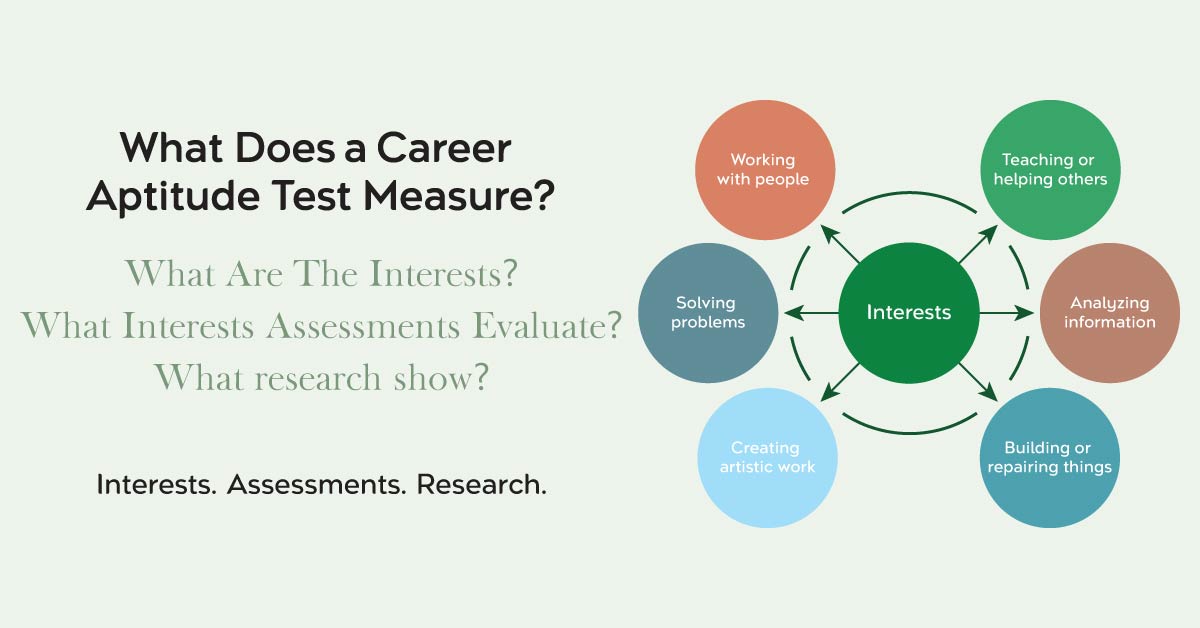
Interests
One of the most important components of a career aptitude test is your interests.
Interest assessments evaluate the activities, subjects, and tasks that naturally attract you.
Examples include:
- Working with people
- Solving problems
- Creating artistic work
- Building or repairing things
- Analyzing information
- Teaching or helping others
Research consistently shows that individuals are more likely to experience long-term career satisfaction when their careers align with their interests.
Personality Traits
Career aptitude tests often measure personality characteristics that influence workplace behavior.
Common personality factors include:
- Introversion versus extroversion
- Leadership tendencies
- Creativity
- Organization
- Emotional stability
- Communication style
- Adaptability
Different personality profiles tend to perform better in different work environments.
For example:
- Extroverted individuals may thrive in sales or management.
- Analytical personalities often succeed in engineering or finance.
- Creative personalities may prefer design, media, or marketing careers.
Strengths and Natural Talents
Another important area measured by career aptitude tests is your natural strengths.
These strengths may include:
- Problem-solving ability
- Critical thinking
- Communication skills
- Leadership ability
- Creativity
- Attention to detail
- Organization
- Decision-making
Understanding your strengths helps identify careers where you are more likely to perform effectively and enjoy your work.
Cognitive Abilities
Some career aptitude assessments also evaluate cognitive abilities.
These may include:
- Logical reasoning
- Numerical reasoning
- Verbal reasoning
- Abstract reasoning
- Pattern recognition
- Analytical thinking
Cognitive assessments help identify areas where individuals may have natural intellectual strengths.
For example:
- Strong numerical reasoning may align with finance or engineering.
- Strong verbal reasoning may support careers in law, education, or communications.
- Strong analytical skills may benefit careers in technology or research.
Work Preferences
People vary significantly in how they prefer to work.
Career aptitude tests often measure workplace preferences such as:
- Independent work versus teamwork
- Structured versus flexible environments
- Leadership versus support roles
- Creative versus analytical tasks
- Indoor versus outdoor work
- Fast-paced versus stable environments
Matching work preferences to career environments can significantly improve job satisfaction.
Values and Motivations
Some career assessments also explore your personal values and motivations.
Examples include:
- Financial success
- Job security
- Creativity
- Helping others
- Prestige
- Independence
- Work-life balance
- Professional growth
Values play a major role in determining long-term career fulfillment.
For example, a person who highly values helping others may experience greater satisfaction in healthcare or education than in purely financial roles.
Learning Style and Adaptability
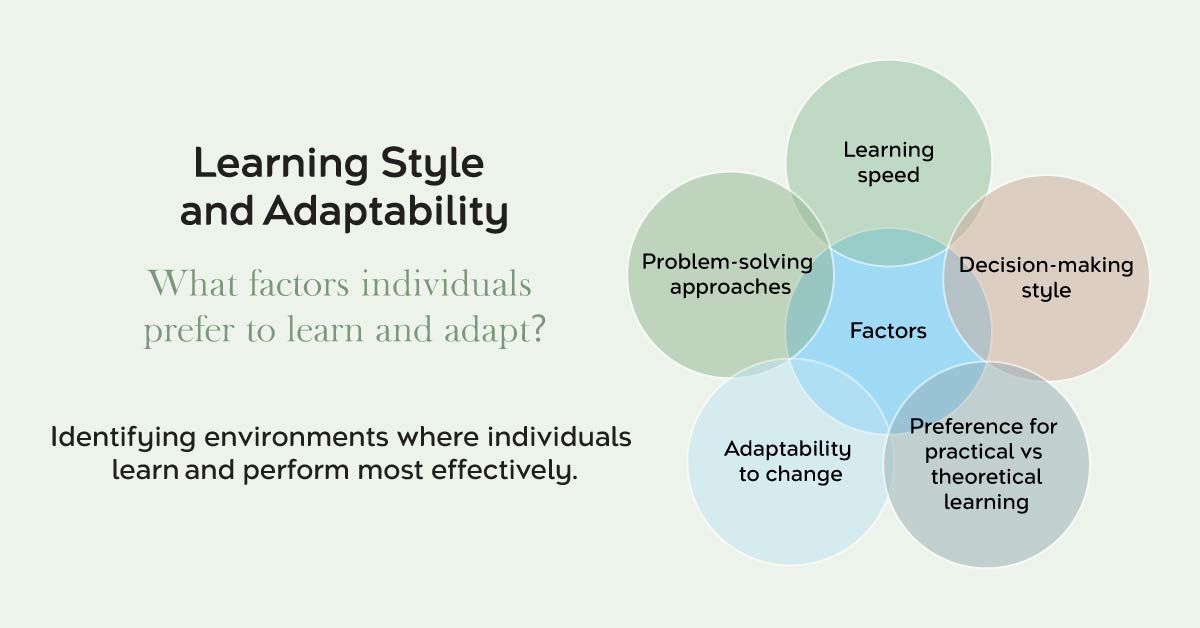
Certain career aptitude assessments evaluate how individuals prefer to learn and adapt.
These factors may include:
- Learning speed
- Problem-solving approaches
- Adaptability to change
- Preference for practical versus theoretical learning
- Decision-making style
Understanding these characteristics can help identify environments where individuals learn and perform most effectively.
Behavioral Patterns
Some advanced career assessments analyze behavioral tendencies, including:
- Risk tolerance
- Stress management
- Collaboration style
- Leadership behavior
- Conflict management
- Decision-making patterns
These insights can help predict how comfortable an individual may feel in various workplace settings.
How Career Aptitude Tests Combine These Measurements
Career aptitude tests do not evaluate each factor independently.
Instead, they combine multiple measurements to create an overall profile.
For example, a person with:
- Strong analytical ability
- High curiosity
- Introverted tendencies
- Preference for independent work
- Strong problem-solving skills
may receive recommendations for careers such as:
- Data science
- Software engineering
- Research
- Finance
- Cybersecurity
Another individual with:
- Strong communication skills
- High empathy
- Leadership tendencies
- Preference for teamwork
may receive recommendations in:
- Education
- Counseling
- Healthcare
- Human resources
- Management
The combination of factors often provides more meaningful recommendations than any single measurement alone.
What Career Aptitude Tests Do Not Measure
Although career aptitude tests can provide valuable insights, they cannot measure everything.
They generally cannot accurately predict:
- Future happiness
- Motivation levels
- Personal determination
- Family circumstances
- Financial limitations
- Life experiences
- Future job market changes
- Career success guarantees
Career aptitude tests should be viewed as guidance tools rather than definitive answers.
Conclusion
Career aptitude tests measure much more than simple preferences or academic ability.
High-quality assessments evaluate multiple dimensions, including interests, personality traits, strengths, cognitive abilities, work preferences, values, and behavioral tendencies to identify careers that may align with your unique profile.
Understanding what career aptitude tests measure can help you interpret your results more effectively and use them as a valuable tool for career exploration and decision-making.
Whether you're a student exploring future possibilities or a professional considering a career change, a career aptitude assessment can provide important insights into your strengths and potential career paths.
Ready to discover what your strengths, interests, and personality traits reveal about your career potential? Take our Career Aptitude Test and explore your future opportunities.
Related Articles Section

