

Introvert Careers: Finding the Right Fit
Published on: August 25, 2026
By : Ariadna Miles
Introvert Careers
Introduction
Introversion is often misunderstood in the workplace. Many people assume that introverts are shy, dislike working with others, or are better suited only to quiet and independent jobs. In reality, introversion is one aspect of personality that may influence how people prefer to interact, work, and restore their energy.
Introverts may enjoy meaningful conversations, teamwork, leadership, and professional relationships. At the same time, they may value time for reflection, focused work, independent thinking, or preparation.
Finding the right career is not simply about choosing a job with limited social interaction. A good career fit depends on many factors, including your interests, strengths, personality traits, abilities, values, goals, and work preferences.
A personality test can help you better understand your natural preferences, while a career aptitude test can help you explore careers that may align with your broader profile.
In this guide, we’ll explore career options that may suit different introverted personalities, identify common strengths associated with introversion, and explain how to find work that feels both suitable and rewarding.
What Does It Mean to Be an Introvert?
Introversion is generally associated with a preference for reflection, lower levels of social stimulation, and time to recharge after busy or highly interactive situations.
Introverted people may:
- Enjoy independent work
- Prefer meaningful conversations
- Think before speaking
- Value privacy
- Focus deeply on tasks
- Prefer smaller groups
- Need quiet time after busy interactions
- Prepare carefully before making decisions
However, not every introvert has the same characteristics.
Some introverts enjoy working closely with others but prefer smaller teams. Others may enjoy public speaking when they have enough time to prepare. Some may be highly sociable but still need time alone after frequent social interaction.
Introversion exists on a spectrum, and personality is only one part of understanding career fit.
Are Introverts Better Suited to Certain Careers?
Some careers may provide work environments that many introverts find comfortable. These may include opportunities for:
- Independent work
- Deep concentration
- Careful analysis
- Creative thinking
- One-to-one communication
- Small-team collaboration
- Flexible working arrangements
However, there is no single list of careers that is suitable for every introvert.
An introvert who enjoys creativity may be interested in writing, design, or content development. An analytical introvert may prefer data, research, engineering, finance, or technology. A people-focused introvert may enjoy education, healthcare, counselling, or one-to-one support.
The most suitable career depends on the individual rather than introversion alone.
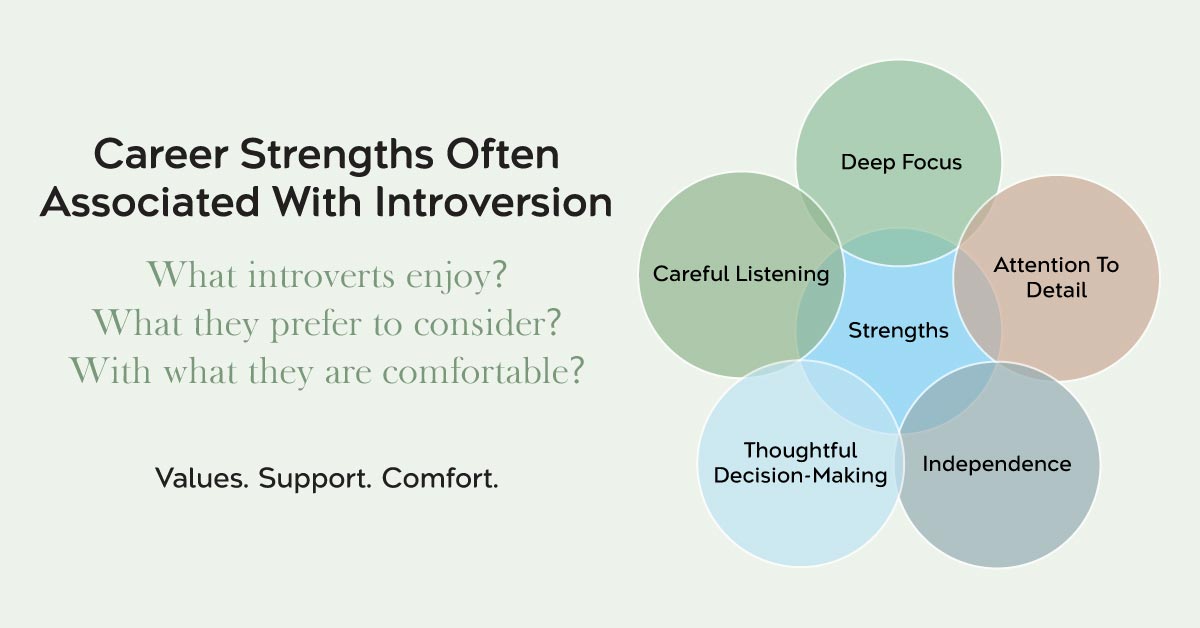
Career Strengths Often Associated With Introversion
Introverts may bring valuable strengths to many workplaces.
Deep Focus
Some introverts enjoy concentrating on complex tasks for extended periods.
This may support careers involving:
- Research
- Programming
- Writing
- Data analysis
- Engineering
- Accounting
Careful Listening
Some introverts prefer to listen and reflect before responding.
This can be valuable in careers involving:
- Counselling
- Coaching
- Healthcare
- Human resources
- Education
- Client support
Thoughtful Decision-Making
Some introverts prefer to consider information carefully before making decisions.
This may support:
- Strategic planning
- Research
- Financial analysis
- Project management
- Technical work
Independence
Many introverts are comfortable working independently and managing their own responsibilities.
This may be useful in:
- Freelance work
- Remote roles
- Research
- Writing
- Design
- Software development
Attention to Detail
Some introverted individuals enjoy reviewing information carefully and identifying details that others may overlook.
This may support careers in:
- Editing
- Quality assurance
- Accounting
- Data analysis
- Software testing
- Laboratory work
These strengths are not exclusive to introverts, and not every introvert will identify with all of them.
Careers That May Suit Introverts
The following career areas may offer opportunities that align with different introverted strengths and preferences.
Technology and Software
Technology careers may provide opportunities for problem-solving, focused work, and structured collaboration.
Possible roles include:
- Software developer
- Web developer
- Data analyst
- Cybersecurity specialist
- Software tester
- Database administrator
- UX researcher
Some technology roles involve frequent meetings and teamwork, so it is important to consider the specific work environment rather than the job title alone.
Writing and Content
Writing careers may suit people who enjoy reflection, research, creativity, and independent work.
Possible roles include:
- Content writer
- Technical writer
- Editor
- Copywriter
- Author
- Research writer
- Content strategist
Many writing roles also involve collaboration with clients, editors, designers, or marketing teams.
Research and Analysis
Research careers may appeal to introverts who enjoy investigating questions, working with information, and developing evidence-based conclusions.
Possible roles include:
- Research analyst
- Market researcher
- Data analyst
- Scientist
- Policy researcher
- Academic researcher
These careers may involve independent work as well as presentations and collaboration.
Design and Creative Work
Creative careers can provide opportunities for independent thinking and focused project work.
Possible roles include:
- Graphic designer
- UX designer
- Illustrator
- Animator
- Photographer
- Video editor
Creative professionals may still need to communicate with clients and work as part of a team.
Finance and Accounting
Finance-related careers may suit individuals who enjoy structure, analysis, accuracy, and problem-solving.
Possible roles include:
- Accountant
- Financial analyst
- Auditor
- Bookkeeper
- Tax specialist
- Risk analyst
The level of social interaction varies between roles and organisations.
Healthcare and Support
Introverts who enjoy meaningful one-to-one interactions may find fulfilment in healthcare or support roles.
Possible careers include:
- Psychologist
- Therapist
- Occupational therapist
- Medical laboratory professional
- Pharmacist
- Healthcare researcher
These roles may involve close communication with patients, colleagues, or clients.
Education
Some introverts enjoy helping others learn, particularly in smaller groups or structured environments.
Possible roles include:
- Teacher
- Tutor
- Educational specialist
- Instructional designer
- Academic adviser
Teaching can involve significant social interaction, but preparation, subject expertise, and meaningful relationships may make it rewarding for some introverts.
Skilled and Technical Careers
Technical and practical careers may provide opportunities for focused work, problem-solving, and independent responsibility.
Possible roles include:
- Laboratory technician
- Engineer
- Architect
- Technical specialist
- Quality-control professional
- Surveyor
Work environments can vary significantly, so it is useful to research the daily responsibilities of each role.
Careers That May Be Challenging for Some Introverts
Some work environments may be more demanding for people who prefer lower levels of social stimulation.
These may include roles involving:
- Constant networking
- Frequent public speaking
- High-volume customer interaction
- Continuous group meetings
- Aggressive sales targets
- Busy and unpredictable environments
However, this does not mean introverts cannot succeed in these careers.
An introvert may enjoy sales, leadership, public speaking, or customer service if the work aligns with their interests and strengths. Skills can also be developed through experience and practice.
The key question is not, “Can an introvert do this job?” but, “Does this role provide a sustainable match with my interests, strengths, values, and preferred way of working?”
How to Find the Right Career as an Introvert
Understanding how career aptitude tests can support career choices may help introverts explore careers that align with their strengths, interests, personality, and preferred work environment.
Understand Your Work Preferences
Consider questions such as:
- Do I prefer independent work or collaboration?
- Do I enjoy one-to-one conversations?
- How much social interaction feels comfortable?
- Do I prefer a quiet or fast-paced environment?
- Do I enjoy structured tasks or creative freedom?
- Do I prefer working remotely, in an office, or in different locations?
Your answers may help you identify work environments that suit you.
Identify Your Strengths
Think about the activities you perform well or enjoy developing.
Your strengths may include:
- Analytical thinking
- Creativity
- Listening
- Writing
- Problem-solving
- Organisation
- Attention to detail
- Technical ability
A career aptitude test can help you explore how your strengths, interests, and work preferences may connect with different career paths.
Look Beyond Job Titles
The same job title can involve very different working conditions.
For example, one software developer may work independently from home, while another may spend much of the day collaborating with a large team.
Before choosing a career, research:
- Daily responsibilities
- Team size
- Work environment
- Communication expectations
- Remote or flexible work options
- Opportunities for independent work
Consider Your Values
Career satisfaction may also depend on what matters to you.
You may value:
- Flexibility
- Stability
- Creativity
- Meaningful work
- Professional growth
- Work-life balance
- Independence
A career that matches your personality but conflicts with your values may not feel like the right long-term fit.
Gain Practical Experience
Internships, volunteering, part-time work, job shadowing, and personal projects can help you understand whether a career suits you.
Practical experience may reveal aspects of a role that are not obvious from a job description.
Can Introverts Be Successful Leaders?
Yes. Introversion does not prevent someone from becoming an effective leader.
Introverted leaders may bring strengths such as:
- Careful listening
- Thoughtful communication
- Preparation
- Independent thinking
- Calm decision-making
Leadership does not require being the loudest person in the room.
Some leaders motivate through energy and public communication, while others build trust through consistency, empathy, careful listening, and thoughtful decisions.
Different leadership styles can be effective in different situations.
Can Introverts Succeed in Highly Social Workplaces?
Yes. Introverts can succeed in busy, collaborative, or highly social workplaces.
They may benefit from strategies such as:
- Preparing for meetings
- Scheduling time for focused work
- Taking short breaks after intensive interactions
- Communicating preferred working methods
- Building strong one-to-one professional relationships
- Setting realistic boundaries
The goal is not to avoid every social situation. It is to find sustainable ways to use your strengths while managing your energy.
How Personality Tests Can Support Career Decisions
A personality test may help you understand preferences related to:
- Social interaction
- Communication
- Decision-making
- Work environments
- Organisation
- Openness to new experiences
However, personality results should not be used to limit career options.
Being an introvert does not mean you should avoid leadership, teamwork, public speaking, or customer-facing careers. Personality insights are most useful when combined with your interests, abilities, values, experience, and career goals.
A career aptitude test may provide a broader perspective by considering several characteristics that can influence career fit.
Conclusion
Being an introvert does not limit your career opportunities.
Introverts can succeed in technology, research, writing, design, healthcare, education, business, leadership, and many other fields. The right career depends on more than personality. Your interests, strengths, abilities, values, goals, and preferred work environment are also important.
A personality test can help you understand your natural preferences, while a career aptitude test can help you explore career options that may align with your broader profile.
Rather than searching for a job labelled “best for introverts”, focus on finding work that allows you to use your strengths, supports your values, and provides a sustainable working environment.
Ready to explore careers that match your strengths, interests, and work preferences? Take our Career Aptitude Test and discover potential career paths.

