

Extrovert Careers
Introduction
Extroverts are often described as outgoing, energetic, sociable, and comfortable interacting with others. These characteristics may influence the types of work environments and professional activities they enjoy, but they do not determine which careers they can pursue.
Many extroverts enjoy communication, collaboration, networking, teamwork, and active work environments. They may feel energised by meeting new people, sharing ideas, leading discussions, or working closely with colleagues and clients.
However, not every extrovert has the same interests, strengths, or career goals. Some may enjoy leadership and public speaking, while others may prefer creative collaboration, relationship-building, problem-solving, or customer-focused work.
Finding the right career involves more than identifying whether you are an extrovert. Your interests, abilities, values, strengths, goals, and work preferences are also important.
A personality test can help you understand your natural preferences, while a career aptitude test can help you explore career paths that may align with your broader profile.
In this guide, we’ll explore career paths that may appeal to extroverts, discuss common strengths associated with extroversion, and explain how to find work that provides a strong long-term fit.
What Does It Mean to Be an Extrovert?
Extroversion is a personality characteristic often associated with enjoying social interaction, external stimulation, active engagement, and collaboration.
Extroverted people may:
- Enjoy meeting new people
- Feel energised by social interaction
- Prefer collaborative work
- Feel comfortable sharing ideas
- Enjoy group discussions
- Build professional relationships
- Prefer active or varied work environments
- Feel motivated by interaction and feedback
However, extroversion exists on a spectrum.
Some extroverts enjoy large groups and frequent social activity, while others prefer smaller teams or one-to-one conversations. An extroverted person may also enjoy quiet work, focused tasks, and time alone.
Extroversion is not the same as confidence, leadership ability, or communication skill. These qualities can vary between individuals and can be developed over time.
Are Extroverts Better Suited to Certain Careers?
Some careers may provide opportunities that align with common extroverted preferences, including:
- Frequent communication
- Teamwork
- Networking
- Relationship-building
- Public interaction
- Collaboration
- Variety and change
- Leadership opportunities
However, there is no single list of careers that is suitable for every extrovert.
An extrovert who enjoys helping others may prefer education, healthcare, coaching, or counselling. An extrovert interested in business may enjoy sales, marketing, management, or entrepreneurship. A creative extrovert may be drawn to media, events, public relations, or content creation.
The best career depends on the individual rather than extroversion alone.
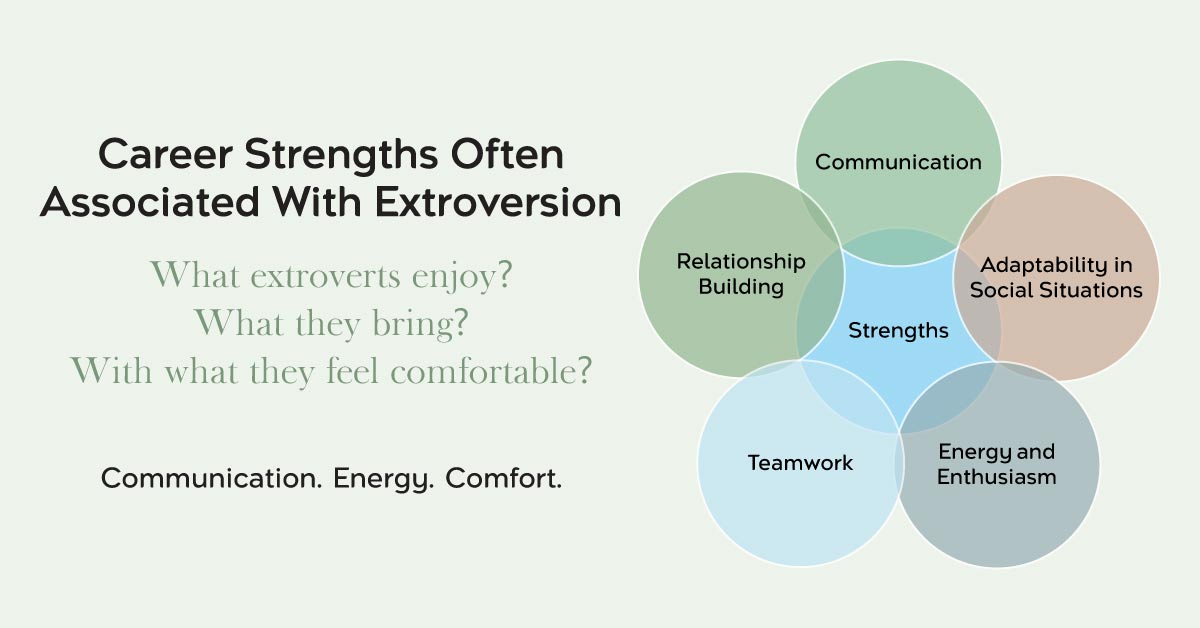
Career Strengths Often Associated With Extroversion
Extroverts may bring valuable strengths to many workplaces.
Communication
Many extroverts enjoy sharing ideas and participating in discussions.
This may support careers involving:
- Sales
- Marketing
- Teaching
- Public relations
- Management
- Media
- Customer relations
Strong communication also requires listening, clarity, and the ability to adapt to different audiences.
Relationship-Building
Some extroverts enjoy meeting new people and maintaining professional connections.
This may be useful in:
- Business development
- Recruitment
- Sales
- Account management
- Public relations
- Community engagement
Teamwork
Many extroverts enjoy collaborating, exchanging ideas, and working towards shared goals.
This may support careers involving:
- Project management
- Healthcare
- Education
- Business
- Events
- Consulting
Energy and Enthusiasm
Some extroverts bring visible energy and enthusiasm to group settings.
This may help with:
- Team motivation
- Presentations
- Client engagement
- Public speaking
- Event management
- Leadership
Adaptability in Social Situations
Some extroverts feel comfortable responding to new people, changing conversations, and unexpected situations.
This may support careers involving:
- Customer service
- Hospitality
- Media
- Events
- Recruitment
- Sales
These strengths are not exclusive to extroverts, and not every extrovert will identify with all of them.
Top Career Paths for Extroverts
The following career areas may offer opportunities that align with different extroverted strengths, interests, and work preferences.
Sales and Business Development
Sales careers often involve communication, relationship-building, negotiation, and understanding customer needs.
Possible roles include:
- Sales representative
- Business development manager
- Account executive
- Client relationship manager
- Sales consultant
- Partnership manager
Successful sales professionals need more than confidence. Listening, product knowledge, preparation, and trust are also important.
Marketing and Public Relations
Marketing and public relations may suit extroverts who enjoy communication, creativity, collaboration, and understanding audiences.
Possible roles include:
- Marketing specialist
- Brand manager
- Public relations specialist
- Social media manager
- Communications manager
- Content strategist
- Community manager
Some marketing roles are highly collaborative, while others involve more independent research and analysis.
Management and Leadership
Extroverts who enjoy guiding others, communicating goals, and building team relationships may be interested in management.
Possible roles include:
- Team manager
- Operations manager
- Project manager
- Department manager
- Business manager
- Executive leader
Extroversion alone does not determine leadership success. Effective leaders also need emotional awareness, decision-making skills, adaptability, accountability, and the ability to listen.
Human Resources and Recruitment
Human resources careers often involve communication, relationship-building, employee support, and organisational development.
Possible roles include:
- Human resources specialist
- Recruiter
- Talent acquisition specialist
- Learning and development professional
- Employee relations adviser
- Human resources manager
These careers may suit people who enjoy understanding others and helping organisations build effective teams.
Teaching and Education
Extroverts who enjoy communication, discussion, and helping others learn may find education rewarding.
Possible roles include:
- Teacher
- Lecturer
- Corporate trainer
- Learning facilitator
- Educational consultant
- Career adviser
Teaching also requires preparation, subject knowledge, patience, organisation, and the ability to adapt to different learners.
Healthcare and Patient-Focused Roles
Extroverts who enjoy helping and communicating with others may be interested in healthcare.
Possible roles include:
- Nurse
- Physician
- Physiotherapist
- Occupational therapist
- Healthcare educator
- Patient support specialist
Healthcare careers often require empathy, technical knowledge, teamwork, and careful communication.
Events and Hospitality
Events and hospitality may suit extroverts who enjoy active environments, teamwork, organisation, and interacting with many people.
Possible roles include:
- Event manager
- Event coordinator
- Wedding planner
- Hotel manager
- Hospitality manager
- Conference organiser
These careers may involve changing schedules, problem-solving, and managing unexpected situations.
Media and Communication
Media careers may appeal to extroverts who enjoy storytelling, public interaction, creativity, and communication.
Possible roles include:
- Journalist
- Presenter
- Broadcaster
- Communications specialist
- Podcast host
- Media relations professional
Some media careers involve public-facing work, while others focus on research, writing, editing, or production.
Entrepreneurship
Entrepreneurship may appeal to extroverts who enjoy building relationships, developing ideas, communicating a vision, and creating new opportunities.
Entrepreneurs may need to:
- Communicate with customers
- Build professional networks
- Present ideas
- Negotiate partnerships
- Lead teams
- Make decisions under uncertainty
Entrepreneurship also requires planning, financial awareness, resilience, problem-solving, and adaptability.
Customer Success and Client Services
Customer-focused careers may suit extroverts who enjoy communication and helping people achieve positive outcomes.
Possible roles include:
- Customer success manager
- Client services manager
- Customer experience specialist
- Account manager
- Client adviser
These roles often require active listening, problem-solving, patience, and strong relationship skills.
Careers That May Be Challenging for Some Extroverts
Some extroverts may find highly isolated or repetitive work less energising, particularly when it provides limited interaction or variety.
Examples may include roles involving:
- Long periods of independent work
- Minimal communication
- Highly repetitive tasks
- Limited collaboration
- Very predictable routines
However, this does not mean extroverts cannot succeed in these careers.
An extrovert may enjoy research, programming, accounting, writing, or technical work if the role matches their interests and strengths. Many jobs also combine independent tasks with teamwork.
The key question is not, “Is this job designed for extroverts?” but, “Does this career match my interests, strengths, values, abilities, and preferred way of working?”
How to Find the Right Career as an Extrovert
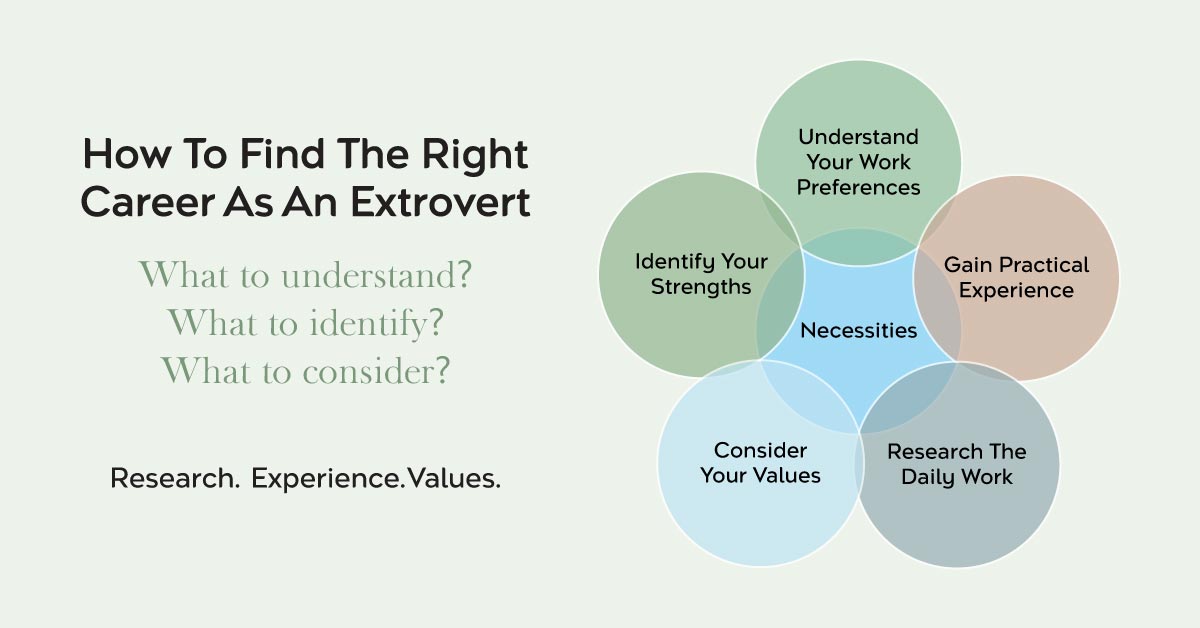
Understand Your Work Preferences
Consider questions such as:
- Do I enjoy working with people every day?
- Do I prefer teamwork or independent work?
- Do I enjoy meeting new people?
- Do I prefer public communication or one-to-one conversations?
- Do I enjoy fast-paced environments?
- Do I prefer variety or predictable routines?
- Do I want to lead, support, create, analyse, or solve problems?
Your answers may help you identify suitable work environments.
Identify Your Strengths
Think about the activities you perform well or enjoy developing.
Your strengths may include:
- Communication
- Relationship-building
- Teamwork
- Leadership
- Persuasion
- Creativity
- Adaptability
- Problem-solving
A career aptitude test can help you explore how your interests, strengths, abilities, and work preferences may connect with different career paths.
Consider Your Values
Career satisfaction also depends on what matters to you.
You may value:
- Helping others
- Professional growth
- Creativity
- Financial opportunity
- Flexibility
- Leadership
- Social impact
- Work-life balance
A highly social career may not be the right fit if it conflicts with your values or long-term goals.
Research the Daily Work
The same job title can involve very different responsibilities depending on the employer, industry, and workplace.
Before choosing a career, research:
- Daily tasks
- Team size
- Communication requirements
- Work environment
- Opportunities for advancement
- Working hours
- Travel requirements
- Remote or flexible work options
Gain Practical Experience
Internships, volunteering, part-time work, job shadowing, and professional projects can help you understand whether a career is a good fit.
Practical experience may reveal whether you enjoy the daily responsibilities, not only the idea of the career.
Can Extroverts Be Effective Leaders?
Yes. Extroverts may bring useful leadership strengths, including communication, enthusiasm, relationship-building, and comfort with group interaction.
However, effective leadership involves more than being outgoing.
Strong leaders may also need to:
- Listen carefully
- Consider different perspectives
- Make informed decisions
- Manage conflict
- Adapt to change
- Support team development
- Take responsibility
Different personality types can lead effectively in different ways.
Can Extroverts Succeed in Independent Careers?
Yes. Extroverts can succeed in careers that involve research, writing, technology, finance, design, or technical work.
Although extroverts may enjoy social interaction, they can also value focused work, independent problem-solving, and time to develop ideas.
Many careers include a mixture of independent tasks and collaboration.
How Personality Tests Can Support Career Decisions
A personality test may help you understand preferences related to:
- Social interaction
- Communication
- Teamwork
- Leadership
- Decision-making
- Work environments
- Organisation
- Openness to new experiences
However, personality results should not be used to limit career options.
Being an extrovert does not automatically mean you should work in sales, management, or public-facing roles. Personality insights are most useful when combined with your interests, abilities, values, experience, and career goals.
A career aptitude test may provide a broader perspective by considering several characteristics that can influence career fit.
Conclusion
Extroversion can influence the work environments and professional activities you enjoy, but it does not determine your career options.
Extroverts can succeed in sales, marketing, leadership, education, healthcare, business, media, technology, research, and many other fields. The right career depends on more than personality. Your interests, strengths, abilities, values, goals, and preferred work environment are also important.
A personality test can help you understand your natural preferences, while a career aptitude test can help you explore career paths that may align with your broader profile.
Rather than choosing a career simply because it is considered “good for extroverts”, focus on finding work that allows you to use your strengths, supports your values, and provides opportunities for meaningful growth.
Ready to explore careers that match your strengths, interests, abilities, and work preferences? Take our Career Aptitude Test and discover potential career paths.

