

How Career Aptitude Tests Work
Introduction
Many people take career aptitude tests hoping to discover the perfect career path. But have you ever wondered how these assessments actually work?
Career aptitude tests are not random quizzes that assign careers based on a few simple questions. High-quality career assessments are designed using psychological and psychometric principles to evaluate various aspects of your personality, interests, strengths, abilities, and work preferences.
Understanding how career aptitude tests work can help you interpret your results more effectively and make better career decisions. In this guide, we'll explain the science behind career aptitude assessments, the different factors they measure, and how they generate career recommendations.
What Is a Career Aptitude Test?
A personality test explores who you are, an IQ test measures how you think, while a career aptitude test identifies careers that fit your overall profile. better understand the differences, explore our guides on career aptitude tests vs IQ tests and career aptitude tests vs personality tests.Rather than focusing on a single factor, most modern career aptitude tests evaluate multiple dimensions, including:
- Interests
- Personality traits
- Strengths and abilities
- Work preferences
- Values and motivations
- Cognitive skills
The purpose of these assessments is not to predict your future but to provide guidance and identify career paths that may suit your natural tendencies and abilities.
Career aptitude tests can benefit:
- Students exploring career options
- Graduates entering the workforce
- Professionals considering career changes
- Individuals seeking greater career satisfaction
The Science Behind Career Aptitude Tests
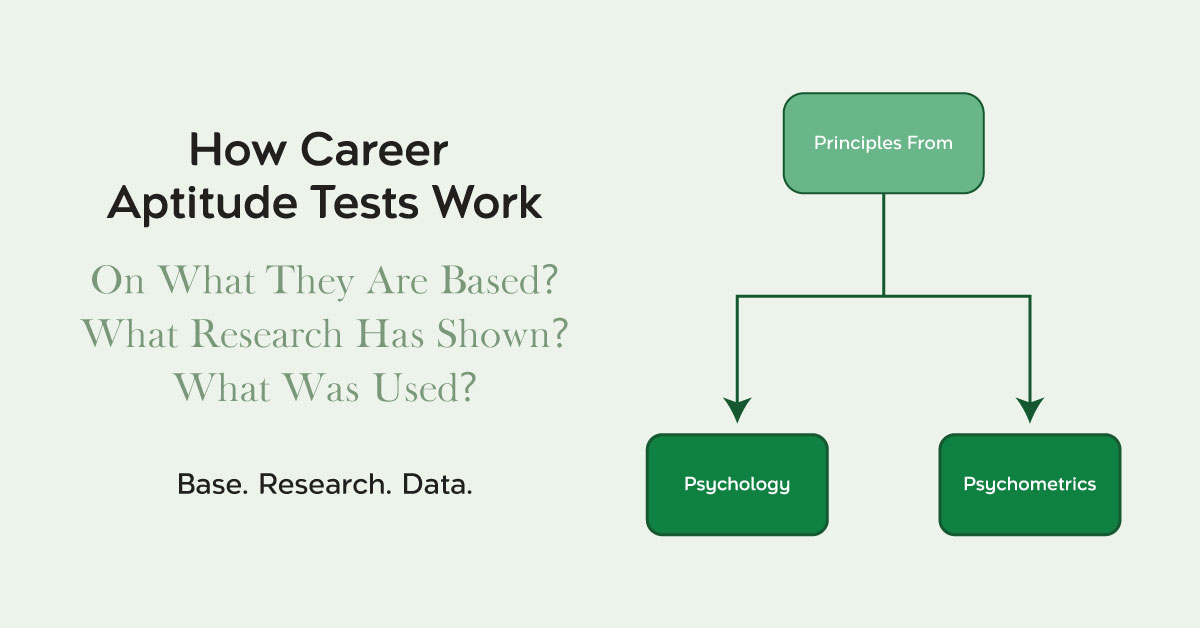
Professional career aptitude tests are typically based on principles from:
Psychology
Psychologists have spent decades studying how personality, interests, and abilities influence career satisfaction and performance.
Research has shown that people are often happier and more successful when their careers align with their natural strengths and preferences.
Psychometrics
Psychometrics is the science of measuring psychological characteristics.
Career aptitude assessments use psychometric methods to ensure that test results are:
- Reliable
- Consistent
- Valid
- Scientifically measurable
High-quality career assessments are developed, tested, and refined using large datasets and statistical analysis.
What Career Aptitude Tests Measure
Interests
Interest assessments evaluate the activities and subjects that naturally attract you.
For example, they may assess whether you enjoy:
- Working with people
- Solving problems
- Creating things
- Analyzing data
- Helping others
- Working outdoors
Your interests often influence long-term career satisfaction.
Personality Traits
Personality assessments evaluate how you typically think, behave, and interact with others.
Common personality factors include:
- Introversion versus extroversion
- Leadership tendencies
- Creativity
- Organization
- Emotional stability
- Communication style
Different personality traits often align with different career environments.
Strengths and Abilities
Career aptitude tests also attempt to identify your natural strengths.
These may include:
- Analytical thinking
- Verbal communication
- Problem-solving
- Creativity
- Attention to detail
- Leadership ability
Understanding your strengths can help identify careers where you are more likely to succeed.
Work Preferences
People differ significantly in how they prefer to work.
Career assessments may evaluate preferences such as:
- Working independently
- Working in teams
- Structured environments
- Flexible environments
- Leadership roles
- Creative tasks
- Technical work
Matching your work preferences to a career environment can improve job satisfaction.
Cognitive Abilities
Some career aptitude tests also evaluate cognitive abilities, including:
- Logical reasoning
- Numerical reasoning
- Verbal reasoning
- Abstract thinking
- Problem-solving skills
These assessments can identify areas where individuals may have particular strengths.
How Career Aptitude Tests Generate Results
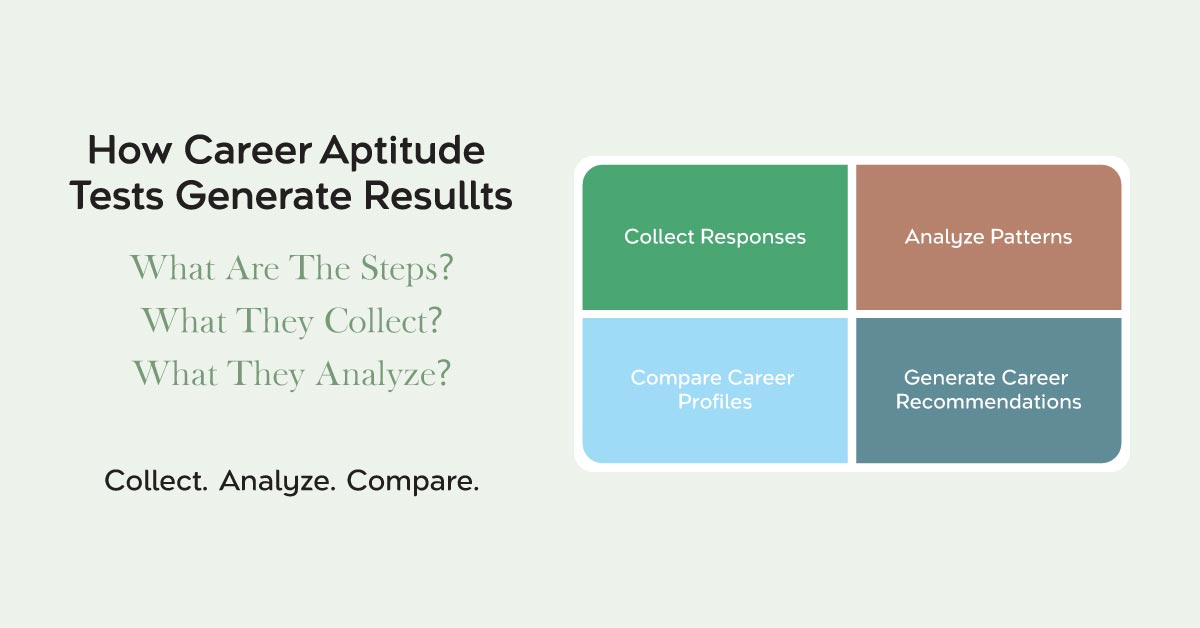
Career aptitude tests generally follow a multi-step process and this is why you should take a career aptitude test.
Step 1: Collect Responses
Users answer a series of questions about:
- Interests
- Preferences
- Behaviors
- Skills
- Workplace tendencies
Questions may include rating scales, forced choices, or scenario-based responses.
Step 2: Analyze Patterns
The assessment compares your responses to established psychological models and scoring systems.
Rather than evaluating individual answers, most tests look for patterns across multiple questions.
For example:
- Strong social interests
- High creativity
- Preference for teamwork
- Strong verbal skills
These patterns create a personal profile.
Step 3: Compare Career Profiles
Career aptitude assessments maintain databases of career profiles that describe:
- Required skills
- Personality characteristics
- Interests
- Workplace environments
- Cognitive demands
Your personal profile is compared against these career profiles to identify potential matches.
Step 4: Generate Career Recommendations
The system then produces a list of careers that best align with your profile.
Results often include:
- Recommended careers
- Strengths analysis
- Personality insights
- Workplace preferences
- Areas for development
Some assessments also provide educational pathways and career planning suggestions.
Why Different Career Tests Produce Different Results
Many people notice that different career assessments produce different recommendations.
This happens because various tests focus on different factors.
For example:
- Interest assessments emphasize what you enjoy.
- Personality assessments focus on behavioral tendencies.
- Cognitive assessments evaluate reasoning abilities.
- Comprehensive assessments combine multiple factors.
Because each test measures different aspects of your profile, using multiple assessments often provides a more complete understanding.
Are Career Aptitude Tests Scientifically Accurate?
High-quality career aptitude tests can provide valuable guidance, but they are not perfect predictors of career success.
Their accuracy depends on several factors:
- Test quality
- Scientific validation
- Honest responses
- Self-awareness
- Personal experience
- Changing interests over time
Career aptitude tests should be viewed as tools for self-discovery rather than definitive career predictions.
How to Get the Most Accurate Results
To maximize the value of a career aptitude assessment:
Answer Honestly
Respond based on your actual preferences rather than what you believe sounds impressive.
Avoid Overthinking
Your natural instincts often provide the most accurate responses.
Take Your Time
Rushing through questions can reduce result quality.
Keep an Open Mind
The best career recommendations may include careers you have never considered.
Combine Multiple Sources
Use career assessments alongside:
- Career research
- Practical experience
- Professional counseling
- Personal reflection
Who Should Take a Career Aptitude Test?
Career aptitude tests can benefit:
- High school students
- College students
- Graduates
- Working professionals
- Career changers
- Individuals returning to work
Career exploration and self-discovery remain valuable throughout life.
Conclusion
Rather than providing a single "correct" answer, these assessments help individuals better understand themselves and explore career options that align with their unique characteristics.
Whether you're a student choosing a career path, a graduate entering the workforce, or a professional considering a career change, understanding how career aptitude tests work can help you choose the best career aptitude tests online and use them more effectively and make more informed career decisions.
Ready to discover careers that match your personality, strengths, and interests? Take our Career Aptitude Test and explore your career potential.

