

Analytical vs Creative Careers: Which Career Path Fits You?
Published on: September 02, 2026
By : Teddy Bridges
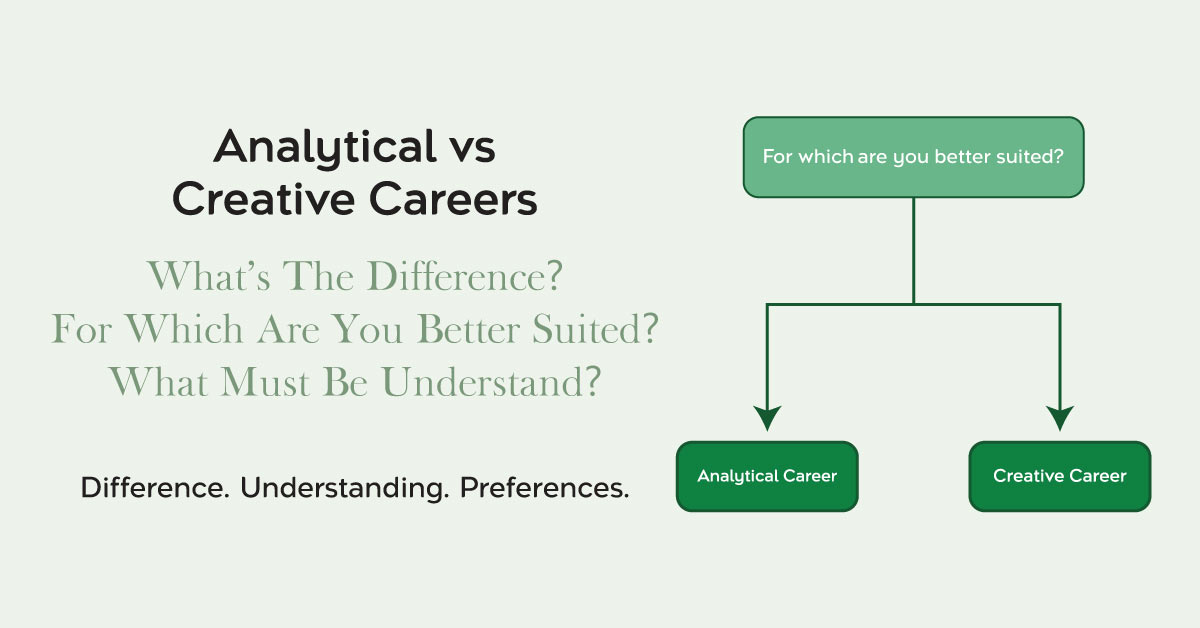
Analytical vs Creative Careers
Introduction
When choosing a career, it can be helpful to understand the types of activities and problems you naturally enjoy. Some people are drawn to numbers, logic, research, and structured problem-solving, while others prefer creativity, ideas, communication, and opportunities to develop something new.
This can lead to an important question: Are you better suited to an analytical career or a creative career?
Analytical and creative careers can involve very different types of work, but the distinction is not always clear-cut. Many modern professions require both analytical thinking and creativity.
For example, a software developer may need logical reasoning while also creating innovative solutions. A marketing professional may use creativity to develop campaigns while relying on data to evaluate their effectiveness.
Understanding your strengths, interests, personality, and preferred way of working can help you explore which career environments may be a good fit.
A career aptitude test can provide additional insights by considering several characteristics together rather than focusing on a single ability.
In this guide, we'll explore the differences between analytical and creative careers, examples of each, and how to determine which type of career may suit you.
What Is an Analytical Career?
An analytical career typically involves examining information, identifying patterns, solving problems, evaluating evidence, or making decisions based on data and logic.
People who enjoy analytical work may prefer:
- Working with numbers or data
- Solving complex problems
- Researching information
- Identifying patterns
- Following logical processes
- Analysing evidence
- Working with systems
- Making decisions based on information
Analytical work can be found across many industries, including technology, finance, science, healthcare, business, and engineering.
Examples of Analytical Careers
Some examples include:
- Data analyst
- Financial analyst
- Accountant
- Software developer
- Engineer
- Economist
- Statistician
- Researcher
- Business analyst
- Actuary
- Scientist
- Market researcher
These careers can involve different levels of communication and creativity, but analytical thinking is often an important part of the work.
What Is a Creative Career?
A creative career typically involves generating ideas, developing concepts, communicating messages, designing solutions, or producing original work.
People who enjoy creative work may prefer:
- Generating new ideas
- Designing or creating things
- Expressing themselves
- Working with visual or written content
- Exploring different possibilities
- Experimenting with approaches
- Developing concepts
- Finding unconventional solutions
Creative careers can be found in industries such as media, design, marketing, entertainment, education, technology, and communications.
Examples of Creative Careers
Some examples include:
- Graphic designer
- Writer
- Copywriter
- Art director
- Photographer
- Content creator
- UX designer
- Marketing specialist
- Creative director
- Architect
- Animator
- Brand strategist
Creative careers are not limited to artistic professions. Creativity can also play an important role in business, technology, education, science, and many other fields.
Analytical vs Creative Careers: Key Differences
Although there can be significant overlap, analytical and creative careers often differ in their typical activities and work approaches.
| Analytical Careers | Creative Careers |
| Focus on data and evidence | Focus on ideas and concepts |
| Often involve structured problems | Often involve open-ended problems |
| Frequently use logical reasoning | Frequently use imagination and experimentation |
| May involve quantitative analysis | May involve visual, written, or conceptual work |
| Often evaluate existing information | Often generate new possibilities |
| Can involve defined processes | May involve greater flexibility |
These are general differences rather than strict rules.
A career can contain elements of both analytical and creative work.
Analytical Careers and Problem-Solving
Analytical careers often involve solving problems by breaking them into smaller components.
For example, an analyst may:
- Gather relevant information.
- Organise and evaluate the information.
- Identify patterns or relationships.
- Consider possible explanations.
- Compare potential solutions.
- Make recommendations based on the available evidence.
This type of work may appeal to people who enjoy understanding how things work and finding logical solutions.
However, analytical thinking is useful far beyond traditionally analytical professions.
Doctors, teachers, managers, entrepreneurs, marketers, and designers may all use analytical thinking as part of their work.
Creative Careers and Problem-Solving
Creative careers also involve problem-solving, but the process may be less structured.
A creative professional may:
- Identify a problem or objective.
- Generate several possible ideas.
- Experiment with different approaches.
- Develop and refine concepts.
- Evaluate feedback.
- Produce a final solution.
Creative problem-solving can involve imagination, experimentation, visual thinking, communication, and the ability to look at a problem from different perspectives.
Creativity is therefore not simply about producing art. It can involve finding new ways to solve practical problems.
Can You Be Both Analytical and Creative?
Absolutely.
Many people have a combination of analytical and creative strengths.
For example, someone might enjoy:
- Analysing data and creating visualisations
- Writing and researching
- Designing products and testing their performance
- Developing software and creating user experiences
- Studying science and developing new ideas
- Analysing business trends and creating marketing strategies
Some careers actively combine both types of thinking.
Careers That Combine Analytical and Creative Thinking
Examples include:
- UX/UI design
- Architecture
- Product management
- Digital marketing
- Advertising
- Data visualisation
- Software development
- Product design
- Market research
- Business consulting
- Content strategy
- Entrepreneurship
These roles demonstrate that analytical and creative thinking are not necessarily opposites.
What Skills Are Important for Analytical Careers?
Analytical careers may benefit from skills such as:
- Logical reasoning
- Numerical reasoning
- Critical thinking
- Research
- Data interpretation
- Attention to detail
- Problem-solving
- Decision-making
- Organisation
Some of these skills can be developed through education, professional experience, and practice.
You do not necessarily need to be naturally strong in every area to pursue an analytical career.
What Skills Are Important for Creative Careers?
Creative careers may benefit from skills such as:
- Idea generation
- Communication
- Visual thinking
- Writing
- Design
- Adaptability
- Imagination
- Storytelling
- Problem-solving
- Collaboration
Creative ability can also develop over time.
Education, practice, feedback, and professional experience can all help people strengthen their creative skills.
How Personality Can Influence Career Preferences
Personality may also influence whether someone prefers certain types of work.
For example, people who enjoy exploring new ideas may be attracted to careers involving innovation and creative problem-solving.
People who prefer structure and organisation may enjoy careers involving clearly defined processes, planning, and systematic analysis.
People who enjoy frequent interaction may prefer collaborative or client-facing roles, while people who prefer independent work may enjoy roles that provide periods of focused concentration.
However, personality does not determine whether someone can succeed in an analytical or creative career.
A person may have an analytical personality and enjoy creative work. Another person may be highly creative but also enjoy working with numbers and data.
This is one reason it can be useful to consider several aspects of yourself when exploring career options.
Analytical vs Creative Careers and Personality Tests
A personality test can provide insights into characteristics such as work preferences, communication tendencies, and behavioural patterns.
These insights may help you understand whether you prefer:
- Structure or flexibility
- Independent or collaborative work
- Routine or variety
- Stability or change
- Practical or exploratory activities
However, a personality test does not necessarily identify which career you should choose.
A career decision involves more than personality.
Your interests, strengths, abilities, values, education, experience, and career goals can all contribute to career fit.
Analytical vs Creative Careers and Cognitive Ability
Cognitive abilities can also be relevant when exploring career options.
Strong reasoning abilities may be useful in many analytical professions, but cognitive ability alone does not determine whether someone will enjoy a particular career.
Similarly, creative careers require more than creativity alone. Communication, technical skills, discipline, collaboration, and understanding the needs of an audience or client may also be important.
How to Find Out Which Career Type Fits You
If you are unsure whether analytical or creative careers are a better fit, consider the following questions.
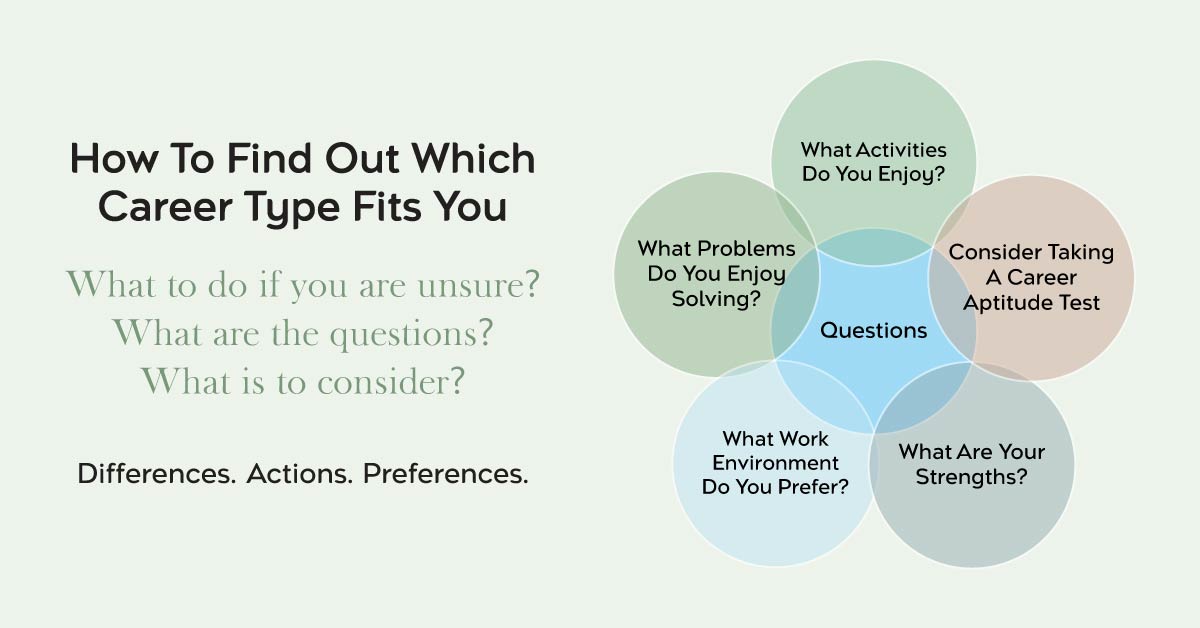
What Activities Do You Enjoy?
Think about what you naturally enjoy doing.
Do you prefer:
- Solving numerical problems?
- Researching information?
- Analysing patterns?
- Designing something?
- Writing?
- Generating ideas?
- Building new concepts?
- Working with people?
Your interests can provide useful clues.
What Problems Do You Enjoy Solving?
Consider the types of problems that keep you engaged.
You might enjoy finding the correct answer to a complex problem.
Or you might prefer having an open-ended challenge where there are many possible solutions.
Neither approach is inherently better.
What Work Environment Do You Prefer?
Think about whether you prefer:
- Structure or flexibility
- Predictability or variety
- Independent work or collaboration
- Clear instructions or freedom to experiment
- Detailed tasks or broader projects
Understanding your preferred environment can help you narrow your career options.
What Are Your Strengths?
Consider areas in which you tend to perform well.
You may have strengths in:
- Mathematics
- Research
- Writing
- Communication
- Design
- Organisation
- Technology
- Leadership
- Problem-solving
- Creativity
Your strongest career fit may involve a combination of several strengths.
Consider Taking a Career Aptitude Test
If you are still unsure, a career aptitude test can provide another perspective.
A comprehensive assessment may consider multiple characteristics, such as:
- Interests
- Personality
- Strengths
- Abilities
- Work preferences
The results can help you generate career ideas and identify areas worth exploring further.
The goal is not to receive one definitive career answer. Instead, the results can give you additional information to consider alongside your own experiences and career research.
Common Mistakes When Choosing Between Analytical and Creative Careers
Assuming You Must Choose One
Analytical and creative abilities can coexist.
Many careers require both.
Choosing a Career Based Only on One Strength
Being good at mathematics does not necessarily mean you will enjoy accounting or engineering.
Likewise, being creative does not automatically mean that a design career will be satisfying.
Interests, values, personality, work preferences, and lifestyle goals also matter.
Confusing Ability With Interest
You may be good at something without wanting to do it every day.
Career decisions should consider both what you can do and what you want to do.
Relying Entirely on a Test
Career assessments can provide useful guidance, but they should not make the decision for you.
Use assessment results as one source of information and combine them with career research and self-reflection.
Conclusion
The choice between analytical and creative careers is not necessarily an either-or decision.
Analytical thinking can help people understand information, solve structured problems, and make evidence-based decisions. Creative thinking can help people generate ideas, explore possibilities, and develop original solutions.
Many modern careers combine both.
The most suitable career path depends on more than whether you consider yourself analytical or creative. Your interests, strengths, personality, abilities, values, work preferences, and long-term goals can all play a role.
If you are exploring your options, a career aptitude test can provide another perspective and help you discover career paths worth investigating.
Ready to explore careers that may match your strengths and interests? Take our Career Aptitude Test and discover potential career paths.

