

How Personality Influences Career Success
Published on: August 29, 2026
By : Ariadna Miles
How Personality Influences Career Success
Introduction
Personality can influence how people communicate, make decisions, respond to challenges, work with others, and approach their professional goals. These characteristics may affect the types of work environments they enjoy and the ways they use their strengths at work.
However, personality does not determine whether someone will succeed in a particular career. People with different personality traits can perform well in the same profession, often by using different approaches and strengths.
For example, one person may succeed by building strong relationships and sharing ideas openly, while another may succeed through careful analysis, independent work, and thoughtful decision-making. Both approaches can be valuable.
Understanding your personality can help you identify work preferences, recognise potential strengths, improve self-awareness, and explore careers that may feel more rewarding. Understanding the difference between a career aptitude test and a personality test can also help clarify how personality relates to career choice. personality test may provide useful insights into your natural tendencies, while a career aptitude test can help you explore how personality, interests, strengths, abilities, and work preferences may connect with different career paths.
In this guide, we’ll explain how personality may influence career success, which personality characteristics can affect workplace performance, and how to use personality insights when making career decisions.
What Is Personality?
Personality refers to relatively consistent patterns in how people think, feel, behave, communicate, and interact with others.
Personality may influence:
- How you communicate
- How you approach decisions
- How you respond to change
- How you work with others
- How you manage responsibilities
- How you solve problems
- How you respond to pressure
- What type of work environment you prefer
Personality is complex and cannot be fully explained by one characteristic.
For example, being introverted or extroverted describes only part of a person’s preferences. Other characteristics, such as organisation, curiosity, emotional awareness, adaptability, and openness to new experiences, may also influence workplace behaviour.
Personality can provide useful insights, but it should not be treated as a fixed label or a limit on future career opportunities.
How Does Personality Influence Career Success?
Personality may influence career success in several ways.
It can affect how people:
- Choose careers
- Adapt to workplace environments
- Communicate with colleagues
- Build professional relationships
- Manage responsibilities
- Respond to feedback
- Approach leadership
- Handle change and uncertainty
- Develop professional skills
The influence of personality often depends on the role and environment.
A highly organised person may perform well in a role involving planning and structure. A person who enjoys social interaction may feel energised by teamwork and client communication. A reflective person may enjoy work that requires concentration, analysis, or independent problem-solving.
However, success is influenced by many factors beyond personality, including:
- Knowledge
- Skills
- Experience
- Education
- Motivation
- Opportunities
- Workplace support
- Professional development
- Career goals
Personality is one part of the overall picture.
Personality and Career Fit
Career fit refers to how well a career aligns with a person’s interests, strengths, abilities, values, goals, and work preferences.
Personality may contribute to career fit by helping people understand questions such as:
- Do I prefer teamwork or independent work?
- Do I enjoy frequent social interaction?
- Do I prefer structure or flexibility?
- Do I enjoy leading others?
- Do I like solving complex problems?
- Do I prefer predictable routines or variety?
- Do I enjoy working in fast-paced environments?
- Do I prefer practical, creative, analytical, or people-focused work?
A strong career fit may support engagement, motivation, and long-term job satisfaction.
However, no career is suitable for only one personality type. Most professions require a variety of strengths, and people can adapt their working styles as they gain experience.
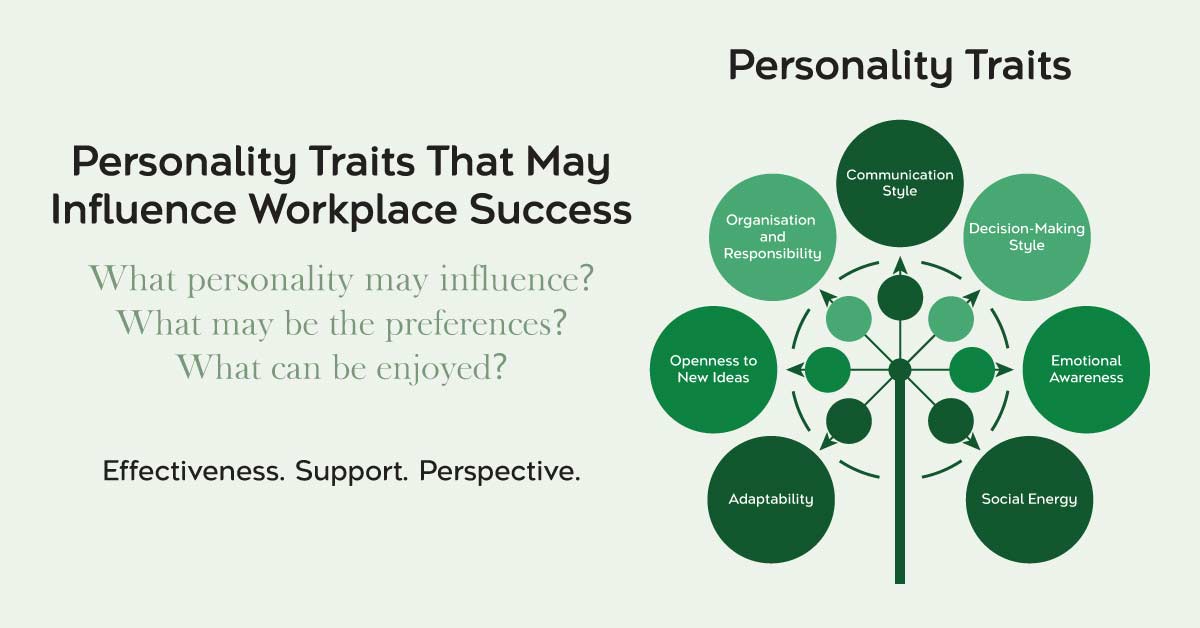
Personality Traits That May Influence Workplace Success
Different personality characteristics may affect workplace behaviour and professional development.
Communication Style
Personality may influence how people express ideas, listen, participate in discussions, and build relationships.
Some people may prefer:
- Open group discussions
- Frequent collaboration
- Presentations and public communication
- One-to-one conversations
- Written communication
- Time to reflect before responding
Different communication styles can be effective.
Career success often depends on adapting communication to the situation and understanding the needs of colleagues, clients, and teams.
Organisation and Responsibility
Some people naturally prefer planning, structure, routines, and clear goals.
These preferences may support:
- Time management
- Meeting deadlines
- Organising projects
- Managing responsibilities
- Maintaining consistent work quality
Organisation can be valuable in many careers, including business, healthcare, education, finance, project management, and administration.
However, organisational skills can also be developed through practice, tools, and effective routines.
Openness to New Ideas
People who enjoy learning, creativity, curiosity, and new experiences may be comfortable exploring different perspectives.
This may support careers involving:
- Innovation
- Research
- Design
- Technology
- Creative work
- Entrepreneurship
- Strategy
Openness may encourage people to consider new solutions, learn new skills, and adapt to changing professional environments.
Adaptability
Adaptability involves responding constructively to change, uncertainty, new responsibilities, and unfamiliar situations.
Adaptable professionals may be more comfortable with:
- Changing priorities
- New technologies
- Different work environments
- Career transitions
- Evolving responsibilities
Adaptability is increasingly valuable because many careers and industries continue to change.
Emotional Awareness
Emotional awareness may influence how people understand their own reactions and respond to the emotions of others.
This can support:
- Teamwork
- Leadership
- Conflict management
- Customer relationships
- Professional communication
Emotional awareness is not limited to one personality type and can be developed through reflection, feedback, and experience.
Social Energy
Some people feel energised by frequent interaction, while others may prefer quieter environments or smaller groups.
This may influence preferences for:
- Team-based work
- Client-facing roles
- Networking
- Public communication
- Independent work
- Focused tasks
Social energy may affect work preferences, but it does not determine communication ability or career potential.
Decision-Making Style
People may approach decisions differently.
Some may prefer:
- Quick action
- Discussion and collaboration
- Detailed analysis
- Careful reflection
- Practical experience
- Creative exploration
Different decision-making styles may be useful in different situations.
Strong professional decision-making often requires balancing information, experience, judgement, and awareness of possible outcomes.
Introversion, Extroversion, and Career Success
Introversion and extroversion are often discussed in relation to careers, but neither characteristic is inherently better for professional success.
Extroverted people may enjoy:
- Collaboration
- Networking
- Group discussions
- Public communication
- Active work environments
Introverted people may enjoy:
- Independent work
- Focused thinking
- Smaller groups
- Careful observation
- Time to reflect
Both personality preferences can offer valuable strengths.
An extroverted professional may build relationships through active communication, while an introverted professional may build trust through careful listening and thoughtful preparation.
Many people also have preferences that vary depending on the situation. Someone may enjoy teamwork while also needing time for focused, independent work.
The goal is not to choose a career based only on whether you are an introvert or extrovert. Instead, consider how your personality interacts with your interests, strengths, abilities, values, and career goals.
Personality and Leadership
Personality may influence leadership style, but there is no single personality type that makes the best leader.
Some leaders may be:
- Outgoing and highly visible
- Calm and reflective
- Analytical and detail-focused
- Creative and innovative
- Supportive and relationship-focused
- Structured and goal-oriented
Effective leadership often involves:
- Clear communication
- Active listening
- Sound decision-making
- Emotional awareness
- Accountability
- Adaptability
- Conflict management
- The ability to support others
Different personalities may bring different strengths to leadership.
For example, an outgoing leader may energise a team through communication and enthusiasm, while a more reflective leader may encourage thoughtful discussion and careful decision-making.
Leadership success depends on behaviour, skills, experience, and the ability to respond to the needs of a team—not personality alone.
Personality and Teamwork
Personality can influence how people contribute to teams.
Some individuals may naturally take on roles involving:
- Leading discussions
- Generating ideas
- Organising tasks
- Analysing information
- Supporting colleagues
- Resolving problems
- Maintaining team relationships
Successful teams often include people with different perspectives and working styles.
A diverse team may benefit from both:
- People who communicate ideas openly
- People who listen and reflect carefully
- People who focus on details
- People who consider the broader picture
- People who prefer structure
- People who adapt easily to change
Understanding personality differences can improve communication, reduce misunderstandings, and support more effective collaboration.
Personality and Career Satisfaction
Career success is not always measured only by salary, job title, or professional status.
For many people, career success also includes:
- Job satisfaction
- Meaningful work
- Personal growth
- Work-life balance
- Positive relationships
- Opportunities to learn
- A sense of achievement
- Alignment with personal values
Personality may influence which of these factors are most important.
For example, one person may value independence and flexibility, while another may prefer teamwork, leadership, and frequent interaction.
Understanding these preferences may help people choose careers and work environments that support long-term satisfaction.
Can Personality Change During Your Career?
Personality characteristics may remain relatively consistent, but people can develop new behaviours, skills, and ways of working throughout their lives.
Professional experience may help people become:
- More confident communicators
- Better organised
- More adaptable
- More comfortable with leadership
- More effective at managing conflict
- More skilled at teamwork
Career changes, new responsibilities, education, and workplace experiences may also influence how people understand and use their strengths.
You do not need to remain limited by a personality description.
A personality assessment may help you understand your current preferences, but it should not be viewed as a permanent prediction of what you can achieve.
How to Use Personality Insights for Career Development
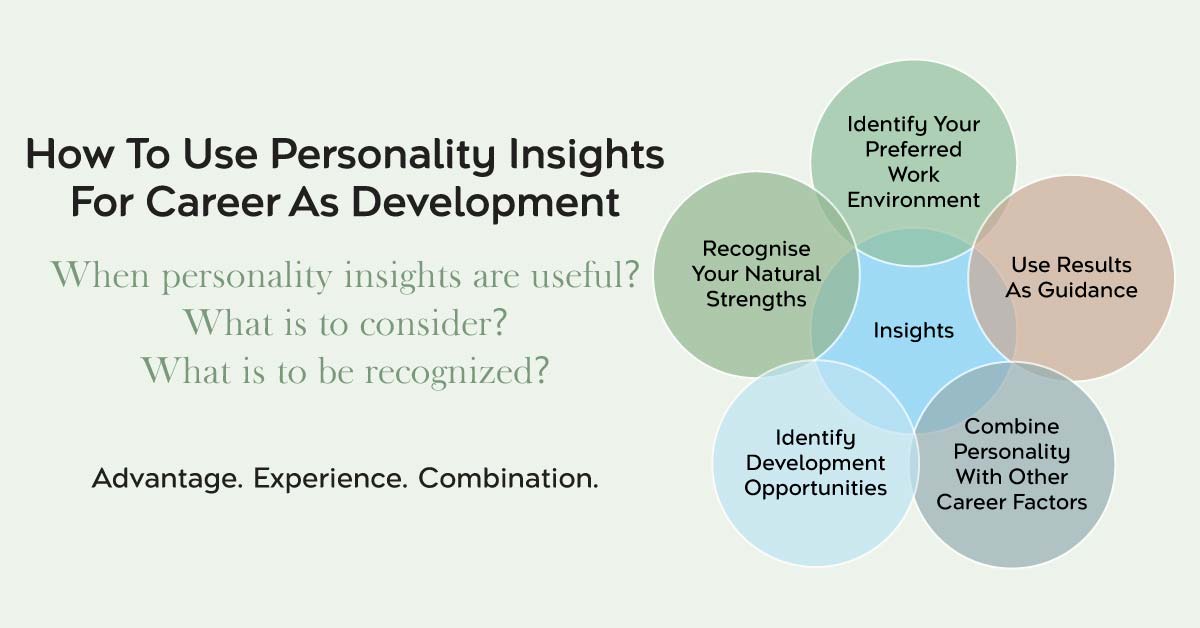
Personality insights can be useful when they support reflection and practical action.
Identify Your Preferred Work Environment
Consider whether you prefer:
- Independent or collaborative work
- Quiet or active environments
- Predictable routines or variety
- Structured tasks or flexible responsibilities
- Frequent communication or focused work
These preferences may help you evaluate career options and workplaces.
Recognise Your Natural Strengths
Think about the activities that feel natural or energising.
You may be strong in:
- Communication
- Planning
- Creativity
- Analysis
- Relationship-building
- Leadership
- Problem-solving
- Attention to detail
Recognising strengths may help you identify areas where you can contribute effectively.
Identify Development Opportunities
Personality insights can also help you recognise skills you may want to develop.
For example, you may want to improve:
- Public speaking
- Organisation
- Delegation
- Adaptability
- Conflict management
- Networking
- Leadership
Personality does not prevent growth. Skills can be developed through experience, education, feedback, and practice.
Combine Personality With Other Career Factors
Personality is most useful when considered alongside:
- Interests
- Strengths
- Abilities
- Values
- Experience
- Education
- Career goals
- Work preferences
A career aptitude test may help you explore several of these factors together and identify career paths that may be worth investigating.
Use Results as Guidance
Personality test results should support exploration rather than make decisions for you.
Use the results to:
- Ask better career questions
- Explore suitable work environments
- Identify strengths
- Recognise development opportunities
- Research career options
Avoid treating personality results as guarantees or fixed career rules.
Common Misunderstandings About Personality and Careers
“My Personality Determines My Career”
Personality may influence career preferences, but it does not determine your future.
People can succeed in many different careers and develop new skills over time.
“Extroverts Are More Successful”
Extroversion may be useful in some roles, but success depends on many factors.
Introverted people can be highly effective leaders, communicators, professionals, and entrepreneurs.
“Introverts Cannot Work With People”
Introverted people can build strong relationships, communicate effectively, and succeed in people-focused careers.
They may simply prefer different communication styles or levels of social interaction.
“Personality Tests Can Tell Me Exactly Which Career to Choose”
Personality tests can provide useful insights, but they cannot guarantee career success or identify one perfect career.
Career decisions should also consider interests, abilities, values, experience, opportunities, and goals.
“Personality Cannot Change”
Although some preferences may remain relatively stable, people can develop new skills, behaviours, and professional strengths throughout their careers.
Conclusion
Personality can influence how you communicate, collaborate, make decisions, respond to change, and approach your professional goals. It may also affect the work environments and career activities you find energising or satisfying.
However, personality does not determine career success.
People with different personalities can succeed in the same profession by using different strengths and approaches. Career success also depends on skills, experience, education, motivation, opportunities, values, and continued development.
Understanding your personality can support greater self-awareness and help you explore career options that may align with your preferences. When combined with your interests, strengths, abilities, and goals, personality insights can become a useful part of informed career planning.
Ready to explore careers that match your strengths, interests, abilities, and work preferences? Take our Career Aptitude Test and discover potential career paths.

