

Are Career Aptitude Tests Worth It?
Introduction
If you're feeling uncertain about your career path, you've probably considered taking a career aptitude test. But are career aptitude tests actually worth your time and effort?
Some people believe these assessments provide valuable insights into strengths, interests, and career options. Others view them as little more than online quizzes with questionable accuracy. The truth lies somewhere in between.
High-quality career aptitude tests can be powerful tools for self-discovery and career exploration, but their value depends largely on how they are used and interpreted. In this article, we'll examine the benefits, limitations, and practical value of career aptitude tests to help you decide whether taking one is worthwhile.
What Is a Career Aptitude Test?
A career aptitude test is a structured assessment designed to identify careers that may align with your personality, interests, strengths, abilities, and work preferences.
Unlike simple entertainment quizzes, professionally developed career aptitude tests use psychological and psychometric principles to analyze multiple aspects of your profile. While a career aptitude test evaluates your interests, strengths, personality, and work preferences to identify suitable careers, a personality test focuses on behavioral traits, and an IQ test measures cognitive abilities such as reasoning and problem-solving.
To better understand the differences, compare our guides on career aptitude tests vs personality tests and career aptitude tests vs IQ tests.Career aptitude tests are commonly used by:
- Students exploring future careers
- College graduates entering the workforce
- Professionals considering career changes
- Individuals seeking greater career satisfaction
The purpose of these assessments is not to predict your future but to provide guidance and support informed decision-making.
Why Do People Take Career Aptitude Tests?
People seek career guidance for many different reasons.
Common motivations include:
- Uncertainty about career options
- Difficulty choosing a college major
- Career dissatisfaction
- Interest in changing careers
- Desire for greater self-understanding
- Curiosity about personal strengths and abilities
Career aptitude tests provide a structured way to explore these questions.
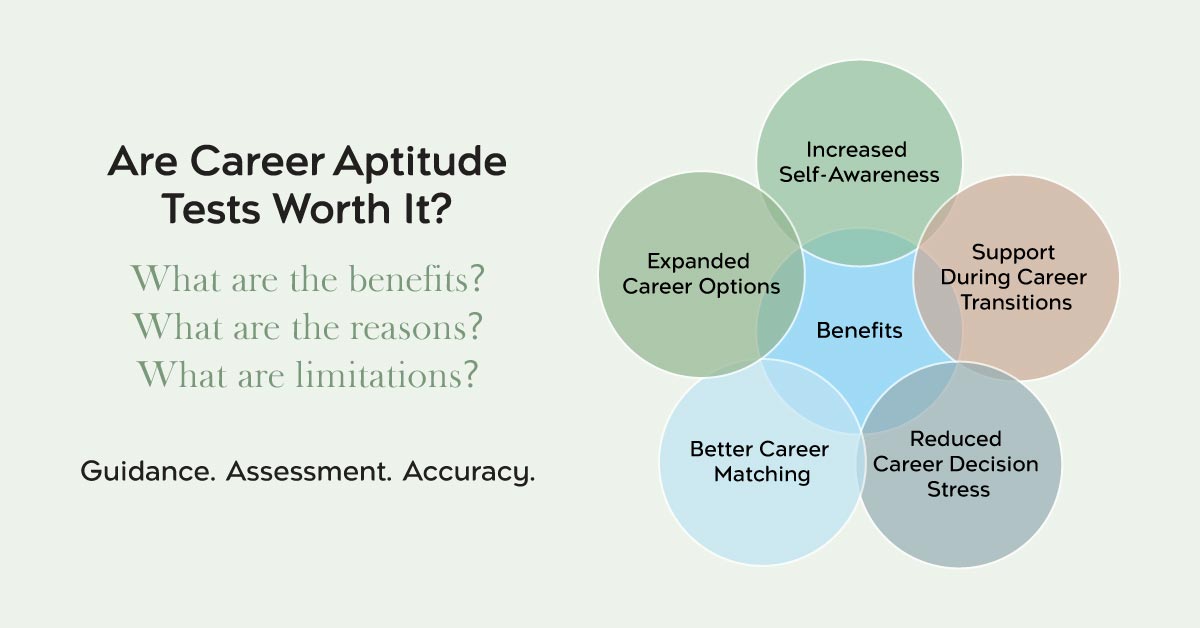
The Benefits of Career Aptitude Tests
Increased Self-Awareness
One of the greatest benefits of career aptitude tests is improved self-awareness.
These assessments can help individuals better understand:
- Personal strengths
- Interests
- Personality traits
- Work preferences
- Natural abilities
Many people discover strengths and preferences they had never previously considered.
Expanded Career Options
Most individuals are familiar with only a small percentage of available careers.
Career aptitude tests often introduce people to career paths they may not have otherwise explored, including:
- Data science
- Cybersecurity
- UX/UI design
- Digital marketing
- Environmental science
- Behavioral psychology
- Sports management
- Artificial intelligence
- Healthcare specialties
This broader perspective can lead to better career decisions.
Better Career Matching
Research suggests that individuals often experience greater job satisfaction when their careers align with their:
- Interests
- Personality traits
- Strengths
- Values
- Work preferences
Career aptitude tests help identify these characteristics and suggest careers that may provide a better fit.
Reduced Career Decision Stress
Choosing a career can feel overwhelming.
Career aptitude tests provide a structured framework that helps narrow down options and reduce uncertainty.
Rather than facing thousands of possible careers, individuals can focus on a smaller number of potentially suitable options.
Support During Career Transitions
Career aptitude tests are not only useful for students.
They can also help:
- Professionals considering career changes
- Individuals returning to work
- Employees experiencing burnout
- People seeking greater job satisfaction
Career assessments can provide valuable perspective during periods of transition.
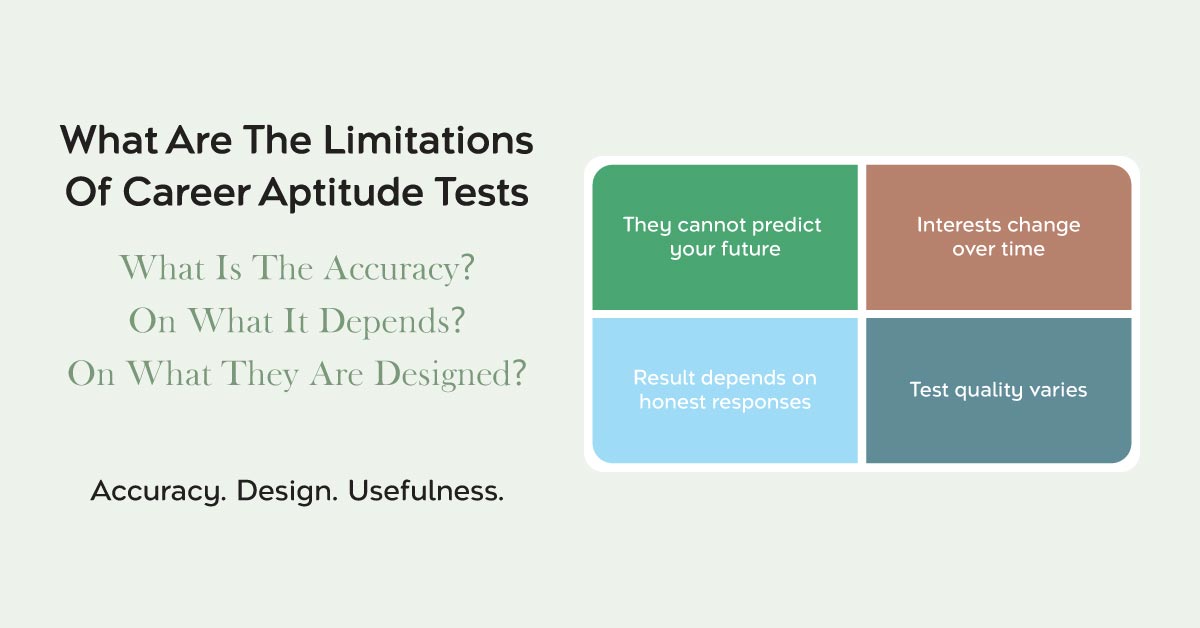
The Limitations of Career Aptitude Tests
Despite their benefits, career aptitude tests also have limitations.
They Cannot Predict Your Future
No assessment can accurately predict:
- Future success
- Career satisfaction
- Happiness
- Financial outcomes
- Career advancement
Human behavior and career development are too complex to predict with certainty.
Results Depend on Honest Responses
The accuracy of a career aptitude test depends heavily on how honestly and accurately you answer the questions.
If you answer based on:
- Social expectations
- Family pressure
- Idealized self-image
- What sounds impressive
your results may be less useful.
Interests Change Over Time
People evolve throughout their lives.
Your:
- Interests
- Values
- Priorities
- Skills
- Career goals
may change over time, meaning career recommendations can also change.
Test Quality Varies
Not all career aptitude tests are equally reliable.
Some online assessments are based on scientific research, while others are designed primarily for entertainment purposes.
High-quality assessments generally:
- Use validated psychological models
- Employ psychometric testing principles
- Provide detailed explanations
- Offer personalized recommendations
When Career Aptitude Tests Are Most Valuable
Career aptitude tests tend to be most useful when:
You Feel Unsure About Your Career Direction
Assessments can help identify possible career paths when you feel overwhelmed by choices.
You're Choosing an Educational Path
Students often benefit from understanding their strengths and interests before selecting subjects or majors.
You're Considering a Career Change
Career transitions can be challenging, and assessments can help identify alternative paths.
You Want Greater Self-Awareness
Career aptitude tests often reveal patterns and preferences that individuals may not recognize themselves.
When Career Aptitude Tests Are Less Useful
Career aptitude tests may be less helpful when:
- You expect a single "perfect" answer.
- You answer dishonestly.
- You ignore practical considerations.
- You rely entirely on the assessment.
- You avoid researching recommended careers.
Career aptitude tests work best as part of a broader career exploration process.
How to Get the Most Value From a Career Aptitude Test
To maximize the benefits of career assessments:
Look for assessments that use established psychological and psychometric principles.
Answer Honestly
Respond based on your genuine preferences and experiences.
Focus on Patterns
Rather than concentrating on one recommended career, identify recurring themes across your results.
Research Career Options
Explore:
- Job responsibilities
- Educational requirements
- Salary expectations
- Career outlook
- Workplace environments
Combine Multiple Sources
Use career aptitude tests alongside:
- Career counseling
- Internships
- Networking
- Personal reflection
Practical experience
So, Are Career Aptitude Tests Worth It?
For most people, the answer is yes.
Career aptitude tests can provide:
- Greater self-awareness
- New career ideas
- Increased confidence
- Improved decision-making
- Better career planning
However, they should not be viewed as magic solutions or guarantees of success.
The greatest value of a career aptitude test lies in helping individuals better understand themselves and explore career possibilities they may not have previously considered.
Conclusion
Career aptitude tests are not perfect, but they can be extremely valuable when used correctly.
Rather than providing a single "correct" career choice, they help individuals better understand their strengths, interests, personality traits, and work preferences. This increased self-awareness often leads to more informed and confident career decisions.
Whether you're a student exploring career options, a graduate entering the workforce, or a professional considering a career change, a quality career aptitude test can provide meaningful guidance and valuable insights.
Ready to discover whether your strengths and interests align with your career goals? Take our Career Aptitude Test and explore your career potential.
Related Articles Section
- What Is a Career Aptitude Test?
- How Accurate Are Career Aptitude Tests?
- Why Take a Career Aptitude Test?
- How Career Aptitude Tests Work
- What Does a Career Aptitude Test Measure?
6. Best Career Aptitude Tests Online: How to Choose the Right Assessment.

