

Big Five Personality Traits and Career Choice
Published on: August 31, 2026
By : Ariadna Miles
Big Five Personality Traits and Career Choice
Introduction
Personality can influence how people communicate, make decisions, approach challenges, work with others, and respond to different work environments. Understanding your personality may therefore provide useful insights when exploring careers and considering which professional paths may feel satisfying and suitable.
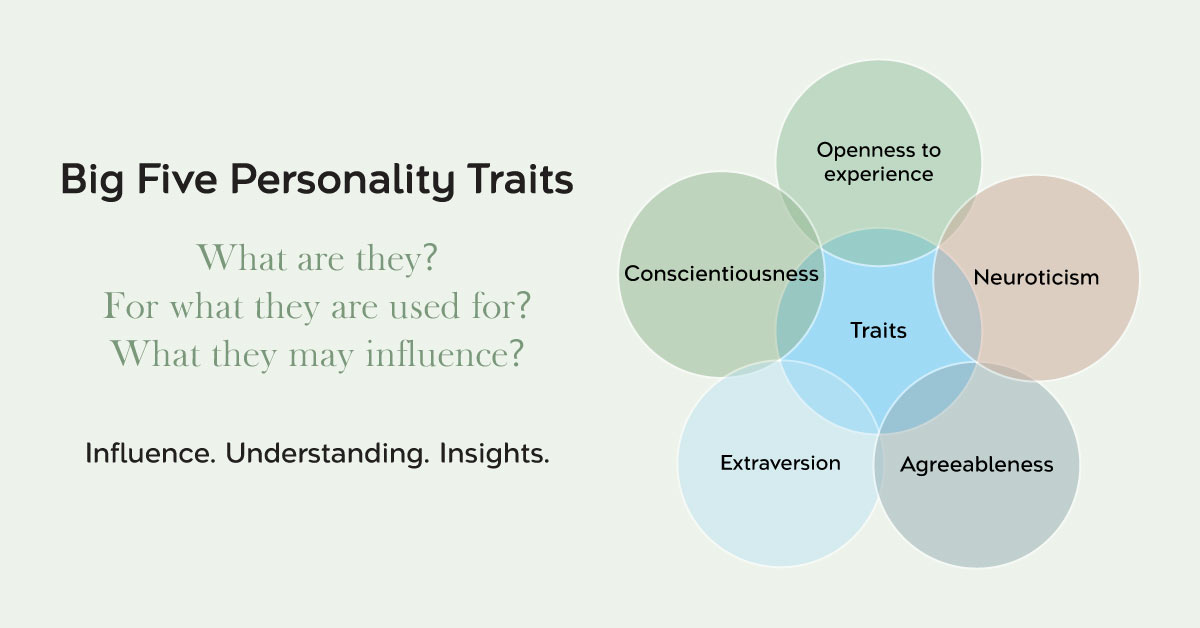
One of the most widely used frameworks for understanding personality is the Big Five personality model. This model describes personality through five broad traits:
- Openness to experience
- Conscientiousness
- Extraversion
- Agreeableness
- Neuroticism
These traits may influence career interests, work preferences, professional behaviour, and the types of work environments people may find comfortable. However, they do not determine which career someone should choose or guarantee success in a particular profession.
For example, a highly organised person may prefer structured work, while a highly curious person may be drawn to learning, creativity, or innovation. An outgoing person may enjoy collaboration and communication, while a more reserved person may prefer focused work or smaller groups. These are possible preferences rather than fixed career rules.
A personality test can help individuals explore their personality characteristics, while a career aptitude test may provide a broader perspective by considering personality alongside interests, strengths, abilities, and work preferences.
In this guide, we’ll explain the Big Five personality traits, explore how each trait may influence career choice, and show how personality insights can support more informed career decisions.
What Are the Big Five Personality Traits?
The Big Five personality model describes personality using five broad dimensions.
The five traits are often remembered using the acronym OCEAN:
- O – Openness to experience
- C – Conscientiousness
- E – Extraversion
- A – Agreeableness
- N – Neuroticism
Each trait exists on a spectrum.
For example, a person may show higher, moderate, or lower levels of openness. A higher or lower level is not automatically better or worse. Different personality characteristics may offer different strengths depending on the individual, career, workplace, and situation.
The Big Five model does not divide people into fixed personality types. Instead, it describes broad patterns in preferences, behaviour, and emotional responses.
How Can the Big Five Influence Career Choice?
The Big Five traits may influence career choice by affecting:
- Preferred work environments
- Communication styles
- Teamwork preferences
- Responses to change
- Decision-making approaches
- Interest in learning and innovation
- Organisation and planning
- Relationship-building
- Responses to pressure
However, personality is only one part of career choice.
Other important factors include:
- Interests
- Skills
- Abilities
- Values
- Education
- Experience
- Career goals
- Financial needs
- Employment opportunities
- Preferred lifestyle
Personality insights may help you understand the types of work you may enjoy, but they should not be used as the only basis for choosing a career.
Openness to Experience and Career Choice
Openness to experience is often associated with curiosity, imagination, creativity, interest in new ideas, and willingness to explore unfamiliar experiences.
People with higher openness may enjoy:
- Learning new concepts
- Exploring different perspectives
- Creative activities
- Innovation
- Intellectual challenges
- Variety and change
- Experimenting with new approaches
Career areas that may appeal to some people with high openness include:
- Design
- Writing
- Research
- Technology
- Marketing
- Architecture
- Media
- Entrepreneurship
- Education
- Product development
These career areas may provide opportunities for creativity, learning, problem-solving, or innovation.
However, high openness does not mean that someone must choose a creative career. A person may express curiosity and creativity in many fields, including science, business, healthcare, engineering, and law.
People with lower openness may prefer:
- Familiar methods
- Clear procedures
- Practical tasks
- Predictable environments
- Established systems
These preferences can also be valuable. Many careers benefit from consistency, practical thinking, reliability, and respect for proven methods.
Conscientiousness and Career Choice
Conscientiousness is often associated with organisation, responsibility, self-discipline, planning, dependability, and attention to goals.
People with higher conscientiousness may prefer:
- Clear objectives
- Structured responsibilities
- Planning and organisation
- Meeting deadlines
- Working towards long-term goals
- Maintaining high standards
Career areas that may appeal to some highly conscientious individuals include:
- Project management
- Accounting
- Finance
- Healthcare
- Engineering
- Administration
- Law
- Operations
- Quality management
Conscientiousness may support behaviours such as preparation, reliability, persistence, and consistent effort.
However, being highly organised is not a requirement for success in every career. People can develop planning, time-management, and organisational skills through practice and experience.
People with lower conscientiousness may prefer:
- Flexible schedules
- Spontaneous activities
- Variety
- Less rigid work structures
- Freedom to adapt their approach
These preferences may be useful in dynamic or creative environments, although effective work habits remain important in every profession.
Extraversion and Career Choice
Extraversion is often associated with social energy, communication, enthusiasm, assertiveness, and engagement with the external environment.
People with higher extraversion may enjoy:
- Teamwork
- Meeting new people
- Group discussions
- Networking
- Public communication
- Collaborative projects
- Active work environments
Career areas that may appeal to some extroverted individuals include:
- Sales
- Marketing
- Public relations
- Management
- Recruitment
- Teaching
- Events
- Hospitality
- Customer success
However, extraversion does not automatically mean that someone is confident, persuasive, or suited to leadership. These abilities can vary and can be developed.
People with lower extraversion may prefer:
- Independent work
- Quiet environments
- Smaller groups
- Focused tasks
- Time to reflect before responding
These preferences may support careers involving:
- Research
- Writing
- Software development
- Data analysis
- Design
- Technical work
- Specialist roles
Neither introversion nor extraversion is better. Both may provide valuable strengths in different careers and work environments.
Agreeableness and Career Choice
Agreeableness is often associated with cooperation, empathy, trust, consideration, and concern for the needs of others.
People with higher agreeableness may enjoy:
- Supporting others
- Working collaboratively
- Building positive relationships
- Helping people solve problems
- Contributing to group goals
- Creating harmonious environments
Career areas that may appeal to some highly agreeable individuals include:
- Healthcare
- Education
- Counselling
- Human resources
- Social services
- Customer support
- Community work
- Coaching
Agreeableness may support teamwork, relationship-building, and empathetic communication.
However, high agreeableness may sometimes make it difficult for some people to set boundaries, manage conflict, or disagree openly. Developing assertiveness can help professionals communicate their needs while maintaining positive relationships.
People with lower agreeableness may be more comfortable with:
- Direct communication
- Critical evaluation
- Competitive environments
- Challenging established ideas
- Independent decision-making
These characteristics may be useful in some situations, particularly when objective analysis, negotiation, or difficult decisions are required.
Neuroticism and Career Choice
Neuroticism is often associated with a greater tendency to experience stress, worry, emotional sensitivity, or negative emotions.
The opposite direction is sometimes described as emotional stability.
People with greater emotional stability may be more comfortable with:
- Uncertainty
- Pressure
- Change
- Difficult feedback
- High-responsibility situations
This may support effective performance in demanding or unpredictable work environments.
However, emotional stability does not mean that a person never experiences stress. Everyone experiences pressure, uncertainty, and emotional challenges at times.
People who are more emotionally sensitive may also demonstrate valuable qualities, such as:
- Awareness of potential risks
- Careful preparation
- Attention to emotional needs
- Empathy
- Thoughtful decision-making
Career fit may depend partly on whether a workplace provides appropriate support, clear expectations, manageable demands, and opportunities to use personal strengths.
No personality trait should be viewed as a guarantee of success or failure.
Big Five Traits and Work Environments
Personality may influence the types of work environments people prefer.
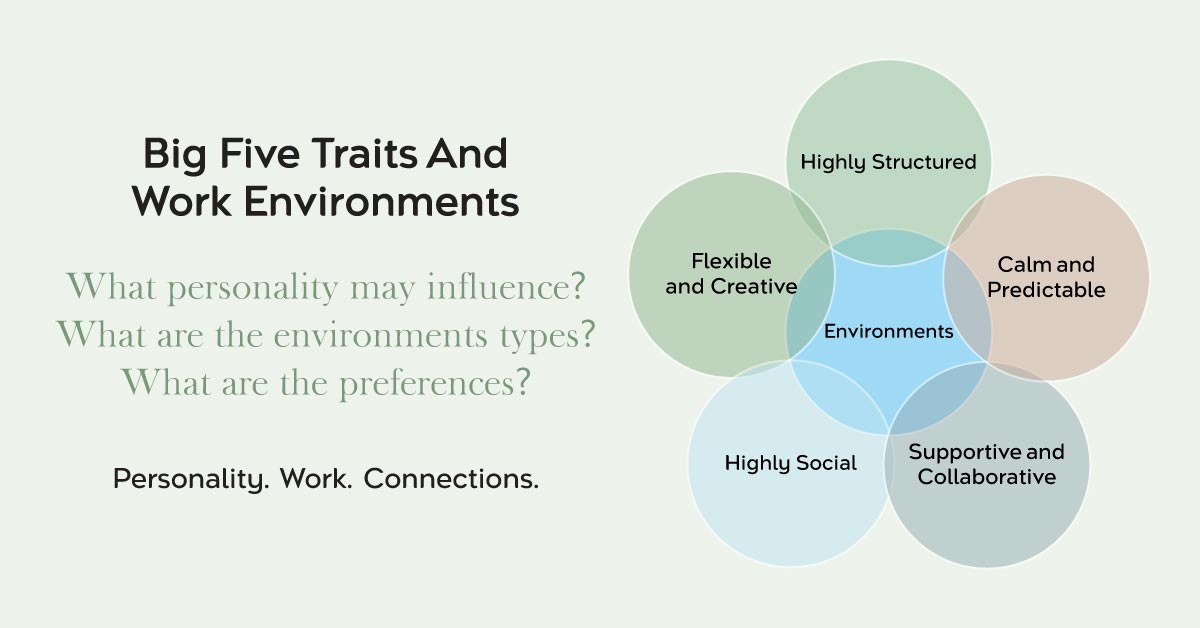
Highly Structured Environments
Some people may prefer:
- Clear responsibilities
- Defined processes
- Predictable schedules
- Measurable goals
These preferences may be connected with higher conscientiousness or a preference for structure and stability.
Flexible and Creative Environments
Some people may enjoy:
- Experimentation
- New ideas
- Changing responsibilities
- Creative problem-solving
These preferences may be associated with higher openness to experience.
Highly Social Environments
Some people may enjoy:
- Teamwork
- Client interaction
- Networking
- Frequent communication
These preferences may be associated with higher extraversion.
Supportive and Collaborative Environments
Some people may value:
- Cooperation
- Shared goals
- Positive relationships
- Helping others
These preferences may be associated with higher agreeableness.
Calm and Predictable Environments
Some people may prefer:
- Clear expectations
- Stable routines
- Manageable workloads
- Time for focused work
These preferences may support wellbeing and effective performance, particularly for people who are more sensitive to stress.
Work environments vary significantly, even within the same profession. Daily responsibilities, management style, team culture, and flexibility may all affect career satisfaction.
Can the Big Five Predict Career Success?
The Big Five traits may be associated with certain workplace behaviours, but personality alone cannot predict career success.
Career success may also depend on:
- Education
- Technical knowledge
- Professional skills
- Experience
- Motivation
- Opportunities
- Workplace support
- Economic conditions
- Career goals
- Personal values
Some personality traits may support certain behaviours.
For example, conscientiousness may support organisation and persistence. Extraversion may support social engagement in some roles. Openness may support curiosity and innovation.
However, the importance of each characteristic can vary depending on the career and work environment.
A successful career is usually influenced by multiple factors working together.
How to Use the Big Five When Choosing a Career
The Big Five can be useful when treated as a tool for self-reflection rather than a system for assigning careers.
Understand Your Preferences
Consider questions such as:
- Do I enjoy learning new ideas?
- Do I prefer structure or flexibility?
- Do I feel energised by frequent social interaction?
- Do I enjoy helping and supporting others?
- How do I respond to pressure and uncertainty?
Your answers may help you understand your preferred work environment.
Identify Your Strengths
Think about the characteristics that support your work.
You may be strong in:
- Creativity
- Organisation
- Communication
- Teamwork
- Empathy
- Analysis
- Adaptability
- Persistence
Understanding your strengths may help you explore careers where you can use them effectively.
Recognise Development Opportunities
Personality insights may also help you identify skills you want to develop.
For example, you may want to improve:
- Organisation
- Assertiveness
- Public speaking
- Adaptability
- Stress management
- Leadership
- Collaboration
Personality does not prevent professional growth. Many workplace skills can be strengthened through learning, feedback, experience, and practice.
Consider Other Career Factors
Personality should be considered alongside:
- Interests
- Abilities
- Values
- Skills
- Education
- Experience
- Career goals
- Employment opportunities
A career aptitude test may help you explore several of these factors together.
Research Careers in Detail
Before choosing a career, investigate:
- Daily responsibilities
- Required education
- Skills and qualifications
- Work environment
- Career progression
- Working hours
- Employment opportunities
The same career may involve different responsibilities depending on the employer or industry.
Common Misunderstandings About the Big Five
“Each Trait Determines a Career”
The Big Five traits do not assign people to specific professions.
People with similar personality profiles may choose very different careers.
“Higher Scores Are Better”
Higher scores are not automatically better.
Different traits may offer different strengths, and their value can depend on the situation.
“Personality Cannot Change”
Some personality preferences may remain relatively stable, but people can develop new behaviours, skills, and professional strengths throughout their lives.
“A Personality Test Can Choose My Career”
A personality test may provide useful insights, but it cannot determine the best career for every individual.
Career decisions should also consider interests, abilities, values, experience, goals, and practical opportunities.
“Introverts and Extroverts Need Completely Different Careers”
Introverts and extroverts may have different work preferences, but both can succeed in a wide range of careers.
Many jobs combine independent work with communication and teamwork.
Conclusion
The Big Five personality traits provide a useful framework for understanding differences in curiosity, organisation, social energy, cooperation, and emotional responses.
These characteristics may influence career preferences, workplace behaviour, communication, teamwork, and the environments in which people feel most comfortable.
However, personality does not determine career success or limit your professional options.
The best career decisions consider personality alongside interests, strengths, abilities, values, experience, goals, and practical opportunities.
A personality assessment may help you understand your preferences, while a career aptitude test can provide a broader perspective on how different personal characteristics may connect with potential career paths.
Ready to explore careers that match your strengths, interests, abilities, and work preferences? Take our Career Aptitude Test and discover potential career paths.

