

Can Personality Predict Career Satisfaction?
Published on: September 17, 2026
By : Teddy Bridges
Can Personality Predict Career Satisfaction?
Introduction
Why do some people feel fulfilled by their work while others feel dissatisfied, even when they have similar qualifications and career opportunities?
Personality may be one part of the answer.
The way you naturally approach challenges, interact with others, respond to change, and organise your work can influence which professional environments feel comfortable or motivating.
For example, someone who enjoys structure and planning may prefer a different work environment from someone who thrives on variety and experimentation. Similarly, someone who enjoys frequent social interaction may experience work differently from someone who prefers independent tasks.
However, personality cannot predict career satisfaction on its own.
Career satisfaction can also depend on interests, abilities, values, work environment, relationships, compensation, workload, opportunities for growth, and expectations about the job.
In this guide, we'll explore how personality may relate to career satisfaction, which personality characteristics can influence work preferences, and how personality and career assessments can help you make more informed career decisions.
What Is Career Satisfaction?
Career satisfaction refers to how positively someone feels about their career or work situation.
It can involve several different aspects of professional life, including:
- Enjoyment of daily work
- Sense of purpose
- Work-life balance
- Relationships with colleagues
- Opportunities for development
- Compensation
- Autonomy
- Recognition
- Work environment
- Alignment with personal values
Career satisfaction is therefore more complex than simply enjoying your job.
A person may enjoy their responsibilities but be dissatisfied with their working hours.
Another person may appreciate their colleagues but want greater opportunities for professional development.
This is why career satisfaction should be considered from several perspectives.
Can Personality Influence Career Satisfaction?
Personality may influence career satisfaction by affecting the types of activities, environments, and interactions people prefer.
For example, someone who enjoys social interaction may prefer a collaborative workplace, while someone who prefers independent concentration may feel more comfortable with individual responsibilities.
Similarly, someone who enjoys new experiences may prefer a role involving variety and learning, while someone who values structure may prefer predictable processes and clearly defined responsibilities.
These preferences can influence how well a person feels their career matches their natural tendencies.
However, personality is only one factor.
A strong match between personality and a job does not guarantee satisfaction, just as a personality difference does not necessarily mean someone will be unhappy in a particular career.
Personality and Person-Job Fit
One useful concept when thinking about career satisfaction is person-job fit.
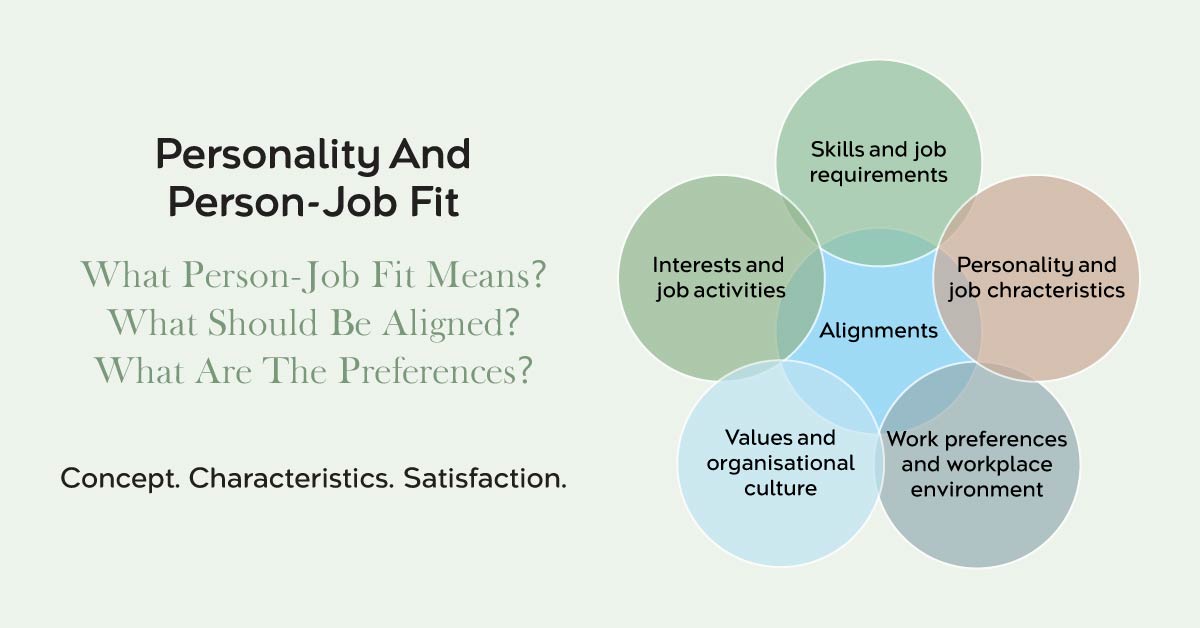
Person-job fit refers broadly to how well a person's characteristics align with aspects of their work.
This can include:
- Skills and job requirements
- Interests and job activities
- Values and organisational culture
- Work preferences and workplace environment
- Personality and job characteristics
For example, someone who enjoys autonomy may prefer a role that allows independent decision-making.
Someone who enjoys collaboration may prefer a position involving frequent teamwork.
Someone who enjoys solving complex problems may find intellectually challenging work more engaging.
The closer the fit between what you value and what your job provides, the more likely the work may feel personally suitable.
However, good fit is not about finding a perfect match.
Most careers involve responsibilities that people enjoy and responsibilities that they find less appealing.
Big Five Personality Traits and Career Satisfaction
The Big Five personality model provides one framework for understanding personality.
It describes five broad dimensions:
- Openness to experience
- Conscientiousness
- Extraversion
- Agreeableness
- Neuroticism
Each trait exists on a spectrum, and people can have different combinations of these characteristics.
For a broader look at these characteristics and career choice, see our article on Big Five Personality Traits and Career Choice.
Openness to Experience
People who are relatively high in openness may enjoy:
- Learning
- Creativity
- New ideas
- Exploration
- Variety
- Intellectual challenges
They may therefore prefer careers that provide opportunities to learn, experiment, create, or explore different subjects.
For some individuals, repetitive work with little opportunity for exploration may feel less satisfying.
However, this depends heavily on the person's other interests and characteristics.
Conscientiousness
Conscientiousness is associated with characteristics such as:
- Organisation
- Responsibility
- Persistence
- Planning
- Self-discipline
- Attention to detail
Highly conscientious individuals may appreciate environments where they can organise tasks, work toward goals, and take responsibility for outcomes.
They may find satisfaction in careers that allow them to see progress and complete meaningful objectives.
However, highly structured work is not automatically satisfying for every conscientious person.
Extraversion
Extraversion is associated with characteristics such as social engagement, energy, and a tendency to seek interaction.
Some more extraverted individuals may enjoy careers involving:
- Networking
- Presentations
- Sales
- Teamwork
- Leadership
- Customer interaction
People with lower levels of extraversion may prefer careers involving more independent or focused work.
Neither preference is inherently better.
The important question is whether the work environment matches the individual's preferred level of social interaction.
Agreeableness
Agreeableness is associated with characteristics such as cooperation, consideration, trust, and interpersonal sensitivity.
People who are relatively high in agreeableness may value:
- Cooperation
- Supportive relationships
- Helping others
- Positive team environments
- Interpersonal harmony
They may therefore enjoy careers involving teamwork, support, education, healthcare, customer relationships, or other people-focused activities.
However, highly agreeable people may also need to consider whether a job requires frequent conflict, competition, or negotiation.
Neuroticism and Emotional Stability
Neuroticism relates to the tendency to experience negative emotions such as anxiety, worry, or emotional sensitivity.
People differ considerably in this dimension.
Work environments can also differ in their levels of:
- Pressure
- Uncertainty
- Competition
- Conflict
- Workload
- Emotional demands
Someone who prefers a lower-pressure environment may experience work differently from someone who enjoys highly demanding or unpredictable situations.
This does not mean that personality determines someone's ability to handle stress.
People can develop coping strategies, and workplace conditions can have a major impact on how stressful a role feels.
Why Personality Alone Cannot Predict Career Satisfaction
It can be tempting to think that knowing someone's personality should make it possible to predict whether they will enjoy a particular career.
In reality, career satisfaction is much more complicated.
Two people with similar personality characteristics can have very different career experiences.
One may have:
- A supportive manager
- Flexible working conditions
- Interesting projects
- Good compensation
- Opportunities for growth
The other may experience:
- Excessive workload
- Limited autonomy
- Poor management
- Few opportunities to develop
- An uncomfortable workplace culture
Even if their personalities are similar, their levels of career satisfaction could be very different.
This demonstrates why personality should be considered alongside the broader context of someone's work.
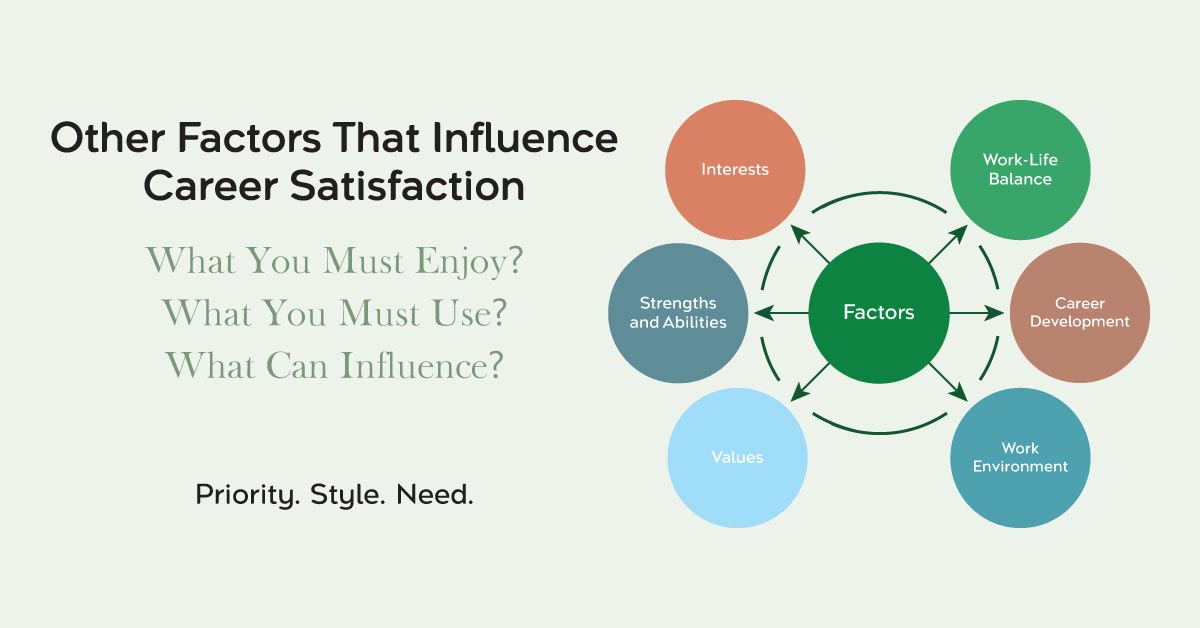
Other Factors That Influence Career Satisfaction
Interests
Enjoying the subject or activities involved in your work can contribute to satisfaction.
For example, someone interested in technology may find technology-related work more engaging than a role involving subjects they have little interest in.
Strengths and Abilities
Using your strengths can make work feel more manageable and rewarding.
A person who enjoys analytical problem-solving may prefer roles that allow them to use those abilities regularly.
Values
Values can influence what people expect from their careers.
Some people prioritise:
- Financial security
- Independence
- Helping others
- Creativity
- Achievement
- Work-life balance
- Social impact
- Professional recognition
A career that conflicts with important personal values may become less satisfying over time.
Work Environment
The same occupation can feel very different in different organisations.
Factors such as management style, workplace culture, flexibility, colleagues, and workload can all influence the experience.
Career Development
Some people need continuous learning and progression to remain engaged.
Limited opportunities for development may contribute to dissatisfaction for people who strongly value career growth.
Work-Life Balance
Career satisfaction does not depend entirely on what happens during working hours.
Commute time, working hours, flexibility, vacation policies, and personal responsibilities can all influence how someone experiences their career.
Personality and Different Work Environments
The environment in which you work can be just as important as the job itself.
For example, consider two people working in the same profession.
One might prefer:
- A large organisation
- Frequent collaboration
- Formal procedures
- Clearly defined responsibilities
Another might prefer:
- A small organisation
- Greater independence
- Flexible processes
- A wider range of responsibilities
Both could perform the same type of work but experience their workplaces differently.
This is why career exploration should consider not only what job you want, but also how you want to work.
Can a Personality Test Help Predict Career Satisfaction?
A personality test can provide useful information about your behavioural tendencies and work preferences.
It may help you understand questions such as:
- Do I prefer structure or flexibility?
- Do I enjoy working with people?
- How comfortable am I with change?
- Do I prefer independent or collaborative work?
- Do I enjoy exploring new ideas?
- How important is routine to me?
These insights can help you identify workplace environments that may be worth exploring.
However, personality test results should not be treated as a prediction of future career satisfaction.
They are better used as a tool for self-reflection and career exploration.
Can a Career Aptitude Test Help?
A career aptitude test can provide a broader perspective by considering multiple characteristics related to career choice.
Depending on the assessment, this may include:
- Interests
- Personality
- Strengths
- Abilities
- Work preferences
This broader approach can be useful because career satisfaction is rarely determined by one characteristic.
For example, you might have a personality that fits a particular career but have little interest in the work.
Alternatively, you might have a strong interest in a career but discover that the typical work environment does not match your preferences.
Considering several factors together can help you explore potential career paths more thoughtfully.
How to Use Personality Insights When Choosing a Career
Personality information becomes most useful when you turn it into practical questions.
Ask What You Enjoy
Consider which activities naturally hold your attention.
Do you enjoy:
- Analysing information?
- Helping people?
- Creating things?
- Organising projects?
- Solving problems?
- Learning new subjects?
- Leading others?
Consider Your Preferred Environment
Think about whether you prefer:
- Quiet or social environments
- Structure or flexibility
- Stability or variety
- Independent or collaborative work
- Predictable or changing responsibilities
Compare Careers
Once you understand your preferences, compare them with actual career requirements.
Look at:
- Typical responsibilities
- Working conditions
- Required qualifications
- Career progression
- Work schedules
- Industry expectations
Test Your Assumptions
Do not rely entirely on personality descriptions.
Talk to professionals, research job descriptions, take relevant courses, volunteer, complete internships, or gain practical experience when possible.
Real-world experience can reveal things that an assessment cannot.
Signs Your Career May Not Fit Your Preferences
Personality does not determine whether you should leave a job.
However, persistent dissatisfaction may encourage you to examine your career fit.
Potential signs include:
- Your daily responsibilities rarely interest you.
- Your preferred working style conflicts with the workplace.
- You have little opportunity to use your strengths.
- The work conflicts with important personal values.
- You have limited opportunities for development.
- The job consistently provides a level of social interaction that feels unsuitable.
- The work environment creates ongoing frustration.
These signs do not necessarily mean you chose the wrong career.
Sometimes changing a team, manager, responsibilities, schedule, or workplace can make a significant difference.
Should You Choose a Career Based on Personality?
Personality should be one consideration, not the deciding factor.
A good career decision should ideally consider several dimensions, including:
Personality + Interests + Strengths + Abilities + Values + Work Preferences + Practical Factors
This broader perspective can help you avoid choosing a career simply because an assessment suggests that your personality “matches” it.
A career should also make sense for your real-life circumstances and long-term goals.
Conclusion
Personality can provide useful clues about the types of work environments, activities, and interactions you may prefer.
Someone who enjoys structure may appreciate organised environments. Someone who values exploration may prefer variety and learning. Someone who enjoys social interaction may seek collaborative or people-focused work.
But personality cannot predict career satisfaction on its own.
Interests, abilities, values, workplace culture, compensation, workload, relationships, career development, and work-life balance can all influence how satisfied someone feels with their career.
The most useful approach is therefore to look at the whole picture.
A personality test can help you understand your behavioural tendencies and preferences, while a career aptitude test can provide broader insights by considering several factors relevant to career exploration.
Ready to explore careers that may fit your personality, interests, strengths, and abilities? Take our Career Aptitude Test and discover potential career paths.

