

Personality Traits Employers Value Most
Published on: September 11, 2026
By : Teddy Bridges
Personality Traits Employers Value Most
Introduction
When employers evaluate candidates, they look at more than qualifications and technical skills. Personality traits can also influence how people communicate, collaborate, solve problems, handle responsibilities, and adapt to different situations.
Some characteristics are frequently valued in professional environments, including reliability, adaptability, communication, teamwork, initiative, and emotional awareness.
However, there is no single personality profile that every employer prefers. Different roles require different combinations of characteristics, and a trait that is useful in one position may be less important in another.
Understanding your personality can therefore help you identify your natural preferences and consider how they may fit different work environments.
In this guide, we'll explore the personality traits employers value most, why they can be useful at work, and how personality insights can support career exploration.
Why Do Personality Traits Matter at Work?
Personality traits can influence how people approach tasks, interact with colleagues, respond to challenges, and adapt to workplace situations.
For example, someone who is highly organised may naturally prefer planning and structured processes, while someone who is highly open to experience may enjoy exploring new ideas and approaches.
These differences can influence how people experience different jobs and workplace environments.
However, personality is only one part of professional performance.
Skills, knowledge, experience, motivation, education, communication abilities, and workplace conditions can all influence how someone performs in a particular role.
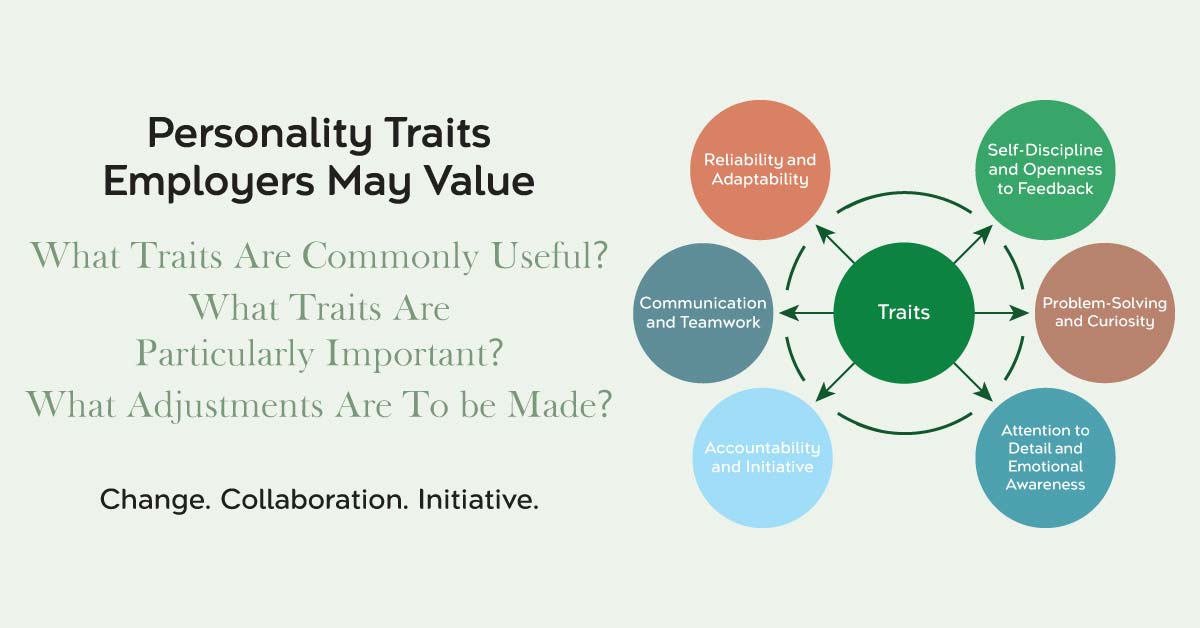
Personality Traits Employers May Value
Different employers may look for different characteristics depending on the position.
However, several traits are commonly useful across many professional environments.
Reliability
Reliable employees can be trusted to take responsibilities seriously and follow through on commitments.
Reliability may involve:
- Meeting deadlines
- Completing assigned tasks
- Communicating when problems arise
- Following agreed processes
- Taking responsibility for work
Reliability can be particularly important in roles where other people depend on an employee's work.
Adaptability
Workplaces can change quickly.
New technologies, processes, responsibilities, teams, and business priorities can require employees to adjust.
Adaptable people may be more comfortable with:
- Changing priorities
- Learning new systems
- Taking on unfamiliar tasks
- Working with different people
- Adjusting to new circumstances
Adaptability does not mean accepting every change without question. It can involve being willing to learn and adjust when circumstances require it.
Communication
Communication is important in almost every workplace.
Employees may need to communicate with:
- Colleagues
- Managers
- Customers
- Clients
- Suppliers
- Business partners
Effective communication can involve listening carefully, explaining information clearly, asking questions, and adapting communication to different audiences.
Communication skills can be particularly important in roles involving teamwork, leadership, sales, education, healthcare, or customer interaction.
Teamwork
Many jobs involve collaboration.
Employees may need to share information, coordinate tasks, resolve disagreements, and work toward common objectives.
People who enjoy collaboration may contribute through:
- Cooperation
- Active listening
- Respect for different viewpoints
- Sharing knowledge
- Supporting colleagues
- Constructive feedback
However, teamwork does not mean that every employee needs to be highly social. Introverted and extroverted people can both be effective team members.
Accountability
Accountability involves taking responsibility for your work and its outcomes.
An accountable employee may:
- Acknowledge mistakes
- Complete commitments
- Communicate problems
- Look for solutions
- Learn from feedback
Employers may value accountability because it can contribute to trust within a team.
Initiative
Initiative involves taking appropriate action without always waiting for someone else to provide instructions.
An employee demonstrating initiative might:
- Identify a problem
- Suggest an improvement
- Learn a new skill
- Offer assistance
- Look for a more efficient approach
The appropriate level of initiative can depend on the role and workplace.
Attention to Detail
Some positions require a particularly high level of accuracy.
Attention to detail can be useful when working with:
- Financial information
- Legal documents
- Technical specifications
- Medical information
- Data
- Quality standards
However, excessive focus on small details can sometimes reduce efficiency. The importance of detail depends on the nature of the job.
Emotional Awareness
Emotional awareness involves recognising and understanding your own emotions and being aware of how others may be feeling.
At work, this can support:
- Communication
- Collaboration
- Conflict management
- Customer interactions
- Leadership
- Professional relationships
Emotional awareness does not mean avoiding difficult conversations. It can help people approach challenging situations thoughtfully.
Problem-Solving
Employers often need employees who can respond constructively when something does not go according to plan.
Problem-solving can involve:
- Identifying the problem
- Gathering relevant information
- Considering possible solutions
- Evaluating alternatives
- Taking appropriate action
- Reviewing the outcome
Problem-solving is useful across technical, creative, administrative, managerial, and customer-facing roles.
Curiosity
Curiosity can encourage people to ask questions, learn new information, and explore better ways of doing things.
Curious employees may be more inclined to:
- Learn new skills
- Explore unfamiliar topics
- Ask questions
- Investigate problems
- Consider alternative approaches
Curiosity can be particularly useful in industries where knowledge and technology change regularly.
Self-Discipline
Self-discipline involves managing your behaviour and staying focused on responsibilities even when motivation fluctuates.
It can support:
- Meeting deadlines
- Maintaining routines
- Completing long-term projects
- Staying focused
- Developing skills
Self-discipline can be particularly relevant in roles requiring independent work.
Openness to Feedback
Professional development often involves receiving feedback.
People who are willing to consider feedback may have more opportunities to identify areas for improvement and develop new skills.
Being open to feedback does not mean accepting every opinion without question. It means being willing to consider constructive information and determine whether it can improve your work.
Which Personality Traits Are Most Important?
There is no universal ranking of personality traits for every job.
The importance of a particular characteristic depends on the role.
For example:
| Career environment | Potentially useful characteristics |
| Project management | Organisation, accountability, communication |
| Healthcare | Reliability, emotional awareness, attention to detail |
| Sales | Communication, adaptability, initiative |
| Research | Curiosity, persistence, analytical thinking |
| Creative work | Openness, curiosity, flexibility |
| Management | Communication, accountability, adaptability |
| Customer service | Communication, patience, emotional awareness |
| Technical roles | Problem-solving, attention to detail, persistence |
These are examples rather than requirements.
People with different personality profiles can succeed in the same career by using different strengths and developing skills that support the role.
Big Five Personality Traits and the Workplace
One widely used framework for understanding personality is the Big Five personality model.
It describes personality across five broad dimensions:
- Openness to experience
- Conscientiousness
- Extraversion
- Agreeableness
- Neuroticism
Each dimension exists on a spectrum.
For example, someone can be relatively high or low in conscientiousness, rather than simply being “conscientious” or “not conscientious.”
These dimensions can provide useful language for understanding behavioural tendencies and workplace preferences.
For a deeper explanation, see our article on Big Five Personality Traits and Career Choice.
Does Being Extroverted Give You an Advantage?
Not necessarily.
Some jobs involve frequent interaction, networking, presentations, or sales, where comfort with social interaction may be useful.
Other jobs involve research, analysis, programming, writing, design, or independent work, where frequent social interaction may be less central.
Both introverted and extroverted people can bring valuable characteristics to the workplace.
For example, an introverted employee may contribute through careful listening, preparation, focused work, and thoughtful communication.
An extroverted employee may enjoy collaboration, discussion, networking, and frequent interaction.
The important question is not whether one personality type is better, but whether the person's characteristics fit the demands of the role and environment.
Can Employers Identify Personality Traits?
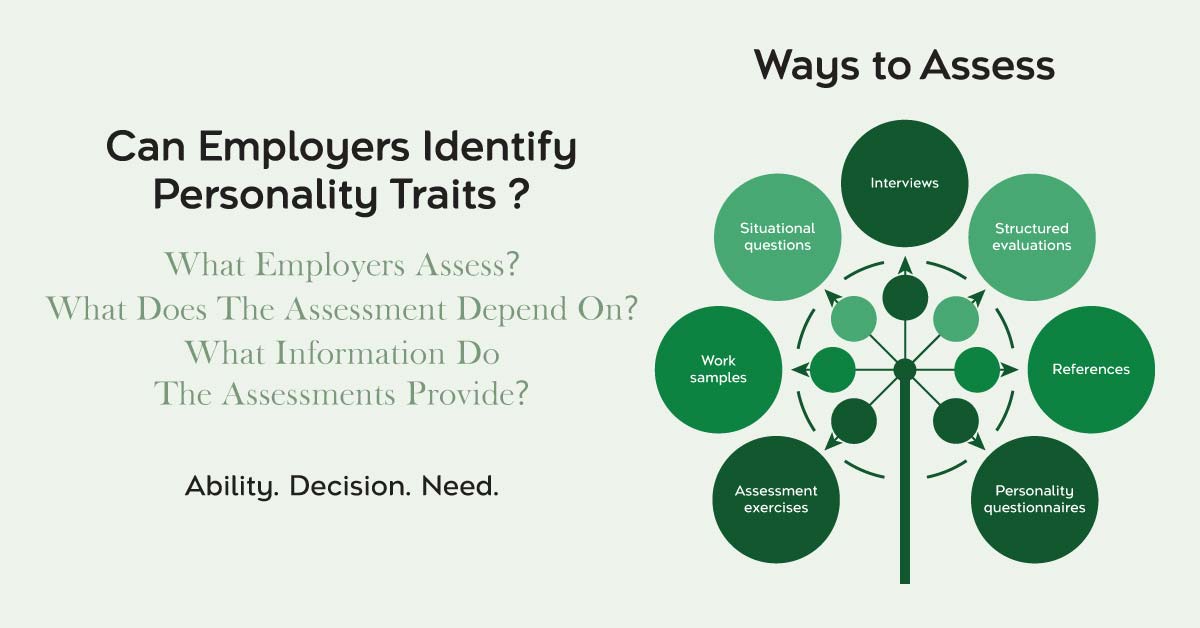
Employers may assess personality in different ways depending on the recruitment process.
Some organisations use:
- Interviews
- Situational questions
- Work samples
- Assessment exercises
- Personality questionnaires
- References
- Structured evaluations
A personality assessment may provide information about behavioural tendencies, but it should not be treated as a complete measure of someone's professional ability.
Recruitment decisions can involve many factors, including qualifications, experience, skills, role requirements, and organisational needs.
Should You Change Your Personality to Become More Employable?
You do not need to completely change your personality to become a stronger candidate.
Instead, focus on developing behaviours and skills that support the type of work you want to pursue.
For example, if you are naturally introverted but want a role involving presentations, you can develop presentation and communication skills without becoming an extrovert.
If you are naturally spontaneous but want a highly structured position, you can develop planning and organisation strategies.
Personality may describe tendencies, but professional skills can be learned and developed.
How to Use Your Personality Strengths at Work
Understanding your personality can help you identify situations where your natural tendencies may be useful.
For example:
- A conscientious person may excel at planning and organisation.
- A curious person may enjoy research and learning.
- An agreeable person may value cooperation and relationships.
- An open-minded person may enjoy innovation and new ideas.
- An extroverted person may enjoy frequent interaction.
- An introverted person may prefer focused work and thoughtful communication.
The goal is not to fit yourself into a personality category.
Instead, use personality insights to understand which environments and responsibilities may feel more natural to you.
Personality Traits vs Skills
Personality traits and skills are not the same thing.
A skill is an ability that can be learned and developed.
For example, someone may naturally be introverted but still develop excellent public-speaking skills.
Similarly, someone may be naturally curious but need to develop research techniques to perform effectively as a researcher.
This distinction is important when thinking about employability.
You can build skills that complement your personality rather than trying to change who you are.
How a Personality Test Can Help
A personality test can provide insights into behavioural tendencies, preferences, and characteristics that may influence how you approach work.
It may help you explore questions such as:
- Do I prefer structure or flexibility?
- Do I enjoy working independently or collaboratively?
- How comfortable am I with change?
- Do I naturally focus on details or broader possibilities?
- Do I prefer leading, supporting, or working independently?
These insights can be useful when comparing careers and workplace environments.
However, personality test results should be viewed as a starting point for self-reflection rather than a prediction of professional success.
Can a Career Aptitude Test Help Too?
A career aptitude test can provide a broader perspective by considering characteristics related to career exploration.
Depending on the assessment, it may consider:
- Interests
- Personality
- Strengths
- Abilities
- Work preferences
This can help you explore career areas that may fit multiple aspects of your profile.
A personality test and a career aptitude test therefore serve different purposes.
A personality test primarily focuses on personality characteristics and behavioural tendencies, while a career aptitude test can connect several personal characteristics with potential career directions.
Conclusion
Employers may value a wide range of personality characteristics, including reliability, adaptability, communication, teamwork, accountability, initiative, curiosity, and openness to feedback.
However, there is no universal personality profile that guarantees employment or career success.
Different careers require different combinations of characteristics, skills, and knowledge. A person's strengths can also be developed and expressed in different ways.
Understanding your personality can help you recognise your preferences and consider which work environments may suit you.
A personality test can provide useful self-reflection, while a career aptitude test can offer a broader perspective by considering several factors related to career choice.
The goal is not to become the personality type employers supposedly want.
The goal is to understand your strengths and find work where you can use them effectively.
Ready to explore careers that may match your personality, interests, and abilities? Take our Career Aptitude Test and discover potential career paths.

