

Career Aptitude Tests for Students: How They Help You Choose the Right Career Path
Published on: July 21, 2026
By : Ariadna Miles
Career Aptitude Tests for Students
Introduction
Choosing a career path is one of the biggest decisions students face. With thousands of career options available today, deciding what to study, which subjects to choose, or what profession to pursue can feel overwhelming.
Many students select careers based on family expectations, peer influence, or popular trends without fully understanding their own strengths, interests, and abilities. This is where career aptitude tests can provide valuable guidance.
Career aptitude tests for students are designed to help identify individual strengths, personality traits, interests, and work preferences to suggest careers that may be a good fit. While these assessments cannot predict the future, they can help students make more informed educational and career decisions.
In this guide, we'll explore how career aptitude tests work for students, their benefits, limitations, and how to use them effectively.
What Is a Career Aptitude Test for Students?
A career aptitude test is a structured assessment designed to identify careers that may align with your personality, interests, strengths, abilities, and work preferences.
Unlike simple entertainment quizzes, professionally developed career aptitude tests use psychological and psychometric principles to analyze multiple aspects of your profile.
While a career aptitude test evaluates your interests, strengths, personality, and work preferences to identify suitable careers, a personality test focuses on behavioral traits, and an IQ test measures cognitive abilities such as reasoning and problem-solving.
To better understand the differences, compare our guides on career aptitude tests vs personality tests and career aptitude tests vs IQ tests.
A career aptitude test for students is a structured assessment designed to evaluate various characteristics that influence career satisfaction and success.
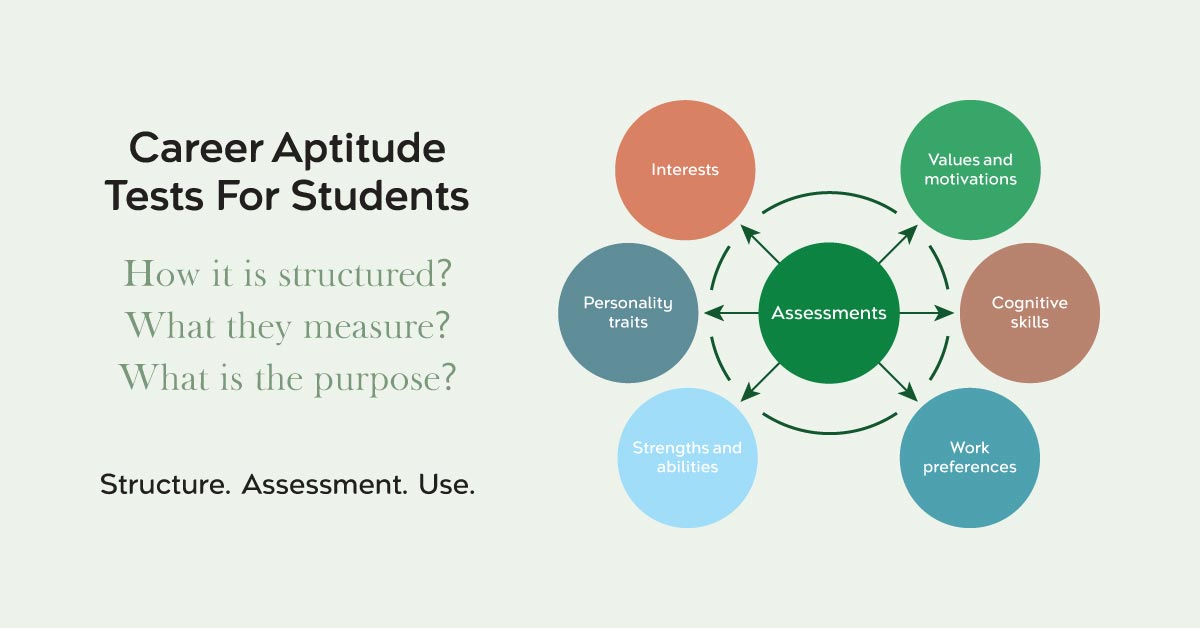
These assessments typically measure:
- Interests
- Personality traits
- Strengths and abilities
- Work preferences
- Cognitive skills
- Values and motivations
The purpose of a career aptitude test is not to tell students exactly what career to pursue but to help them better understand themselves and identify suitable career options.
Career aptitude tests can be particularly useful for:
- High school students
- Secondary school students
- College students
- Students choosing subjects or majors
- Students exploring future career opportunities
Why Do Students Struggle to Choose a Career?
Many students experience uncertainty when making career decisions.
Common reasons include:
- Limited exposure to career options
- Pressure from parents or society
- Lack of self-awareness
- Fear of making the wrong decision
- Rapidly changing job markets
- Confusion about strengths and interests
Without proper guidance, students often choose careers based on assumptions rather than personal suitability.
How Career Aptitude Tests Help Students
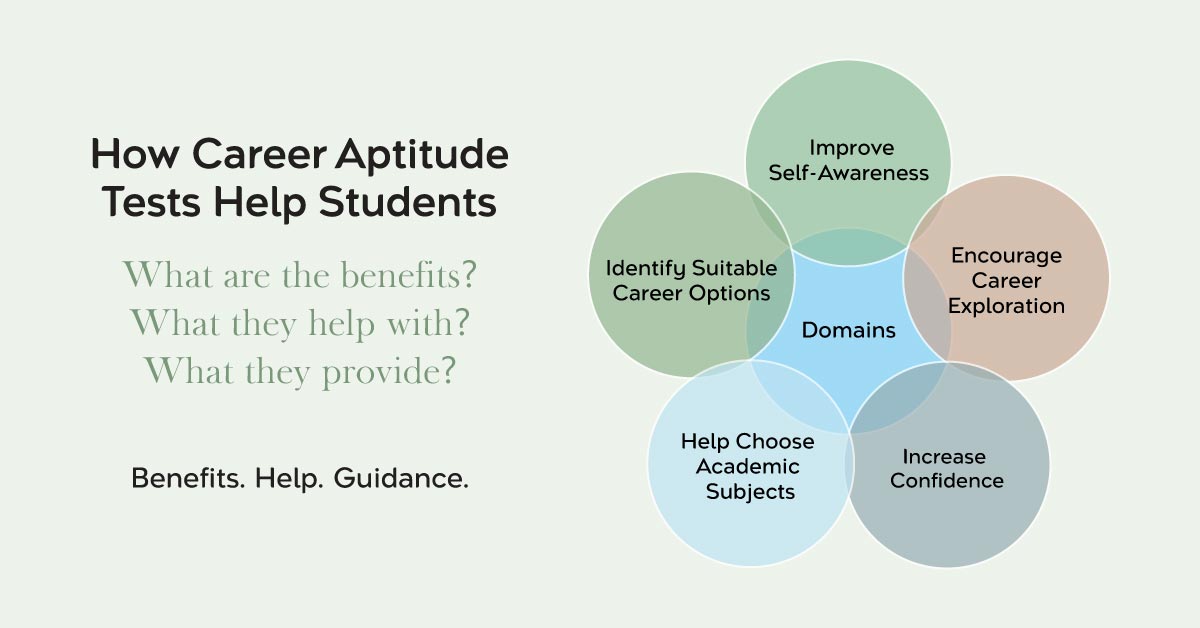
Improve Self-Awareness
One of the greatest benefits of career aptitude tests is helping students understand themselves better.
These assessments can identify:
- Natural strengths
- Personal interests
- Personality traits
- Learning preferences
- Work styles
Greater self-awareness often leads to better educational and career decisions.
Identify Suitable Career Options
Many students only consider a small number of traditional professions.
Career aptitude tests can introduce students to a wider range of careers, including:
- Data science
- Artificial intelligence
- Cybersecurity
- Digital marketing
- UX/UI design
- Environmental science
- Healthcare professions
- Sports management
- Behavioral psychology
- Software engineering
This expanded awareness helps students make more informed choices.
Help Choose Academic Subjects
Students often struggle to select school subjects, academic streams, or college majors.
Career aptitude tests can help identify educational paths that align with:
- Interests
- Strengths
- Career goals
- Learning preferences
This can reduce uncertainty when making important academic decisions.
Increase Confidence
Career uncertainty can create stress and anxiety.
Career aptitude tests provide structured guidance that helps students feel more confident about their future plans.
Although these assessments do not provide guaranteed answers, they often reduce confusion and improve decision-making confidence.
Encourage Career Exploration
Career aptitude tests encourage students to explore:
- New career possibilities
- Educational requirements
- Workplace environments
- Long-term career opportunities
This exploration process often leads to more thoughtful career planning.
What Do Career Aptitude Tests Measure?
Most career aptitude tests for students evaluate multiple factors.
Interests
These assessments identify activities and subjects that naturally appeal to students.
Examples include:
- Helping people
- Solving problems
- Building things
- Creating art
- Working with technology
- Analyzing information
Personality Traits
Career assessments evaluate personality characteristics such as:
- Introversion versus extroversion
- Leadership tendencies
- Creativity
- Organization
- Communication style
- Adaptability
These traits influence workplace preferences and career satisfaction.
Strengths and Abilities
Students may discover strengths in areas such as:
- Problem-solving
- Communication
- Leadership
- Creativity
- Analytical thinking
- Attention to detail
Understanding strengths helps identify suitable career paths.
Work Preferences
Career aptitude tests also evaluate preferred work environments, including:
- Teamwork versus independent work
- Structured versus flexible environments
- Creative versus analytical tasks
- Leadership versus support roles
Matching these preferences to careers can improve long-term satisfaction.
Are Career Aptitude Tests Accurate for Students?
High-quality career aptitude tests can provide valuable insights, but they are not perfect predictors of future success.
Their usefulness depends on several factors:
- The quality of the assessment
- Honest responses
- Student maturity
- Self-awareness
- Changing interests over time
Students should view career aptitude tests as exploration tools rather than definitive answers.
When Should Students Take a Career Aptitude Test?
Students can benefit from career assessments at several stages.
Middle School or Early Secondary School
Useful for exploring interests and strengths.
High School
Helpful when selecting subjects, streams, or educational pathways.
Before College
Can support decisions about majors and career goals.
During University
Useful for career planning, internships, and professional development.
How Students Should Use Career Aptitude Test Results
To get the most value from a career aptitude test, students should:
Answer Honestly
Respond based on personal preferences rather than external expectations.
Look for Patterns
Focus on recurring themes rather than a single career recommendation.
Research Career Options
Explore:
- Job responsibilities
- Educational requirements
- Salary expectations
- Career growth opportunities
Gain Practical Experience
Whenever possible, students should seek:
- Internships
- Volunteer work
- Job shadowing
- Career workshops
- Extracurricular activities
Seek Career Guidance
Career counselors can help students interpret assessment results and make informed decisions.
What Career Aptitude Tests Cannot Do
Career aptitude tests have limitations.
They cannot:
- Predict future success
- Guarantee happiness
- Replace career counseling
- Account for life circumstances
- Predict future job markets
- Make decisions for students
Career decisions should always involve multiple sources of information.
Conclusion
Career aptitude tests can be valuable tools for students navigating educational and career decisions.
By evaluating interests, personality traits, strengths, and work preferences, these assessments help students better understand themselves and explore suitable career paths.
Although no career aptitude test can guarantee success, they can provide important insights, increase confidence, and support better decision-making.
Whether you're choosing school subjects, selecting a college major, or simply exploring career possibilities, a career aptitude test can be an excellent starting point for planning your future.
Ready to discover careers that match your strengths, interests, and personality? Take our Career Aptitude Test and explore your future opportunities.

